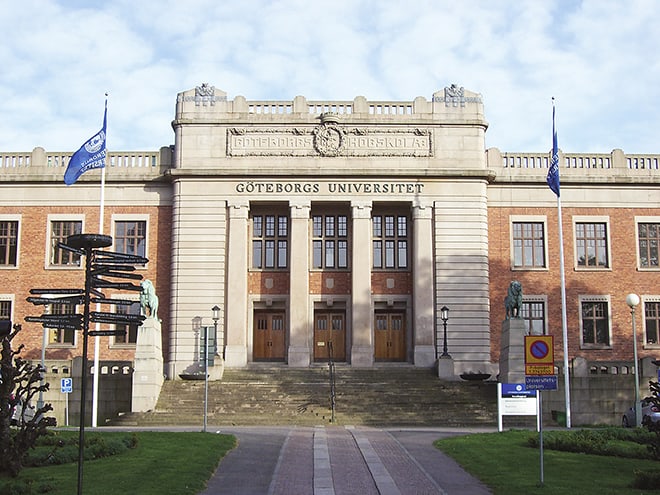
In 2024, the Department of Education, Communication and Learning (IPLK) at the University of Gothenburg implemented organisational changes. The university gave notice of ten redundancies due to lack of work in connection staff cuts. Four order of priority lists were then created.
Local trade unions believed that there was no need for so many lists. Claudia Guala, Chief Legal Officer at SULF, notes that it was unclear why the various order of priority groups were drawn up in the way they were within the groups, or how and why employees were placed in one group or another.
The Swedish Teachers’ Union also believes that the University of Gothenburg has made the order of priority groups far too narrow and is therefore in breach of both the Employment Protection Act (LAS) and the applicable collective agreement. The Swedish Teachers’ Union argues that staff with sufficient qualifications and a longer duration of employment have been made redundant whilst people with a shorter duration of employment have been allowed to stay.
According to the employees themselves, these are teachers who are all interchangeable. The redundancies concerned teaching on programmes for pre-school teachers and school-age educare teachers, and according to Claudia Guala, the unions might have been open to a distinction between these two groups, “But to have four order of priority groups, that doesn’t make sense.” During the negotiations, SULF has identified a further 56 staff members who it claims have essentially comparable work to those in the order of priority groups. SULF has received no explanation of why these 56 were not included in the groups.
“The employer has claimed that certain individuals have managerial roles, but when we examined the scope of their duties, they are actually at a lower level than some of those who have been included in the groups,” she explains.

Claudia Guala
Chief Legal Officer at SULF
Three SULF members were impacted by the department’s decision. All of them had been employed at the University of Gothenburg for a long time – 19, 17 and 10 years, respectively. Guala believes that one of them should not have been included in the order of priority process at all. That member had been on leave from their teaching position for two years for fixed-term postdoctoral employment, but there was no lack of work relating to the duties they performed prior to their leave of absence.
“The two people who took over their duties were not included on the order of priority list, so we don’t understand why this person was included on the list and given notice of redundancy. The second member, who we believe should not have been included on an order of priority list, was mainly engaged in research and did not have any teaching. There are others who carry out research at a lower level who were not placed on the list. Similarly, there are employees who taught to a greater extent than this member who were not included on the list.”
With regard to the third member, SULF can accept that they were placed on the order of priority list but claims that the employer did not fulfil its obligation to conduct a redeployment assessment. According to Guala, there were several positions to which all three could have been redeployed.
Negotiations took place at local level for over a year, and the University of Gothenburg maintains that no errors were made. SULF and the Swedish Agency for Government Employers have differing views on what the agency has and has not said in central negotiations regarding the former employees having priority access to vacant positions and the amounts to be paid to them to settle the dispute.
The Swedish Teachers’ Union has taken legal action against the University of Gothenburg regarding the same operational changes and the same breach of the order of priority rules that SULF is now taking legal action for. Their case concerns two members, and the Swedish Agency for Government Employers has submitted its response, arguing that the dispute was only negotiated at one level and that the claim should therefore be dismissed. The Agency believes that negotiations should have taken place at two levels and describes it as a mixed dispute because it also constitutes a breach of the collective agreement. The Labour Court will now rule on the Agency’s motion to dismiss the case.
“The most serious aspect of this is what this has meant for the employees,” says Guala with a sigh. “They have lost their jobs. Two of them have had to move to other parts of the country, along with their families. A state agency of this size should not make such mistakes. From a purely legal perspective, we also regard it a serious matter that they are attempting to change long-established practice. If they are to use such narrow criteria when creating order of priority lists, they need to explain why. They have not provided an explanation, and this lack of clarity has characterised the whole process.”
Jacob Lindberg, a Legal Officer at the University of Gothenburg, responded to Universitetsläraren’s enquiry by email. With regard to the two points of dispute – the composition of the order of priority groups and whether the employer fulfilled its obligation to conduct a redeployment assessment – he points out that the dispute is ongoing, so he cannot comment on the specific case beyond “the extensive documentation that has been drawn up in the case”. When it comes to the employer’s responsibility regarding information about the process relating to operational changes in general, he writes that “it is clear from the law and agreements what information must be provided and in what order.”
He also refers to a governance document produced by the University of Gothenburg. He emphasises that this document clarifies the process for organisational changes. Regarding the process and the fact that it has dragged on for so long, he writes:
“My view is that the main reason the local negotiations took some time to conclude is that, during the course of the negotiations, a significant amount of material and information was introduced that needed to be examined.”
Catrine Folcker, a national officer at SULF, believes that the University of Gothenburg has handled the matter poorly and that it has failed both with regard to the creation of order of priority groups and the redeployment assessment process.
“It is never a good thing to have to go as far as taking legal action, but it is nevertheless the right thing to do in order to show that this is not how things should be done.”