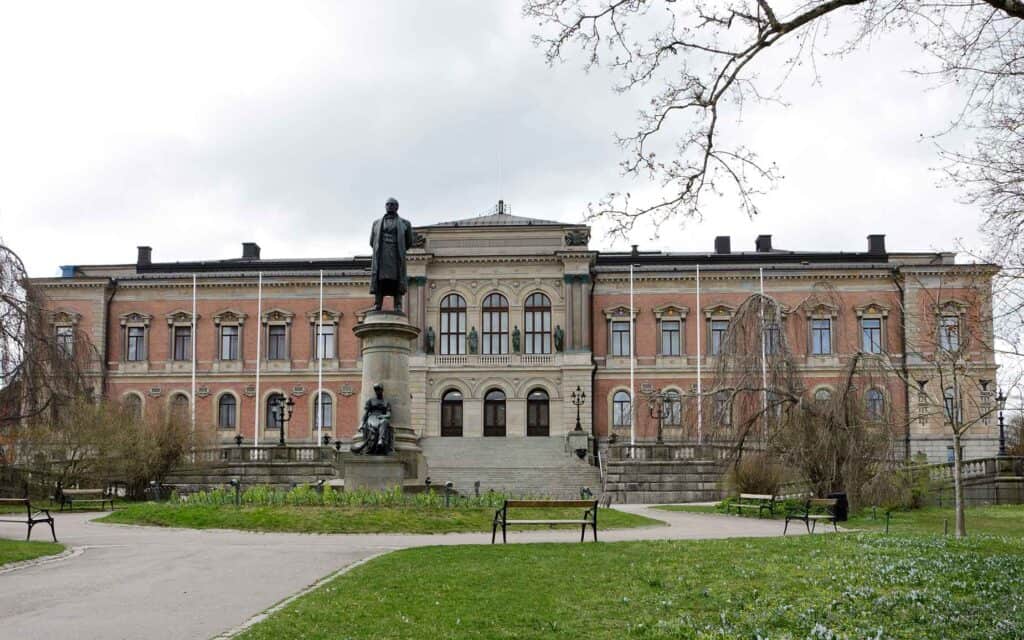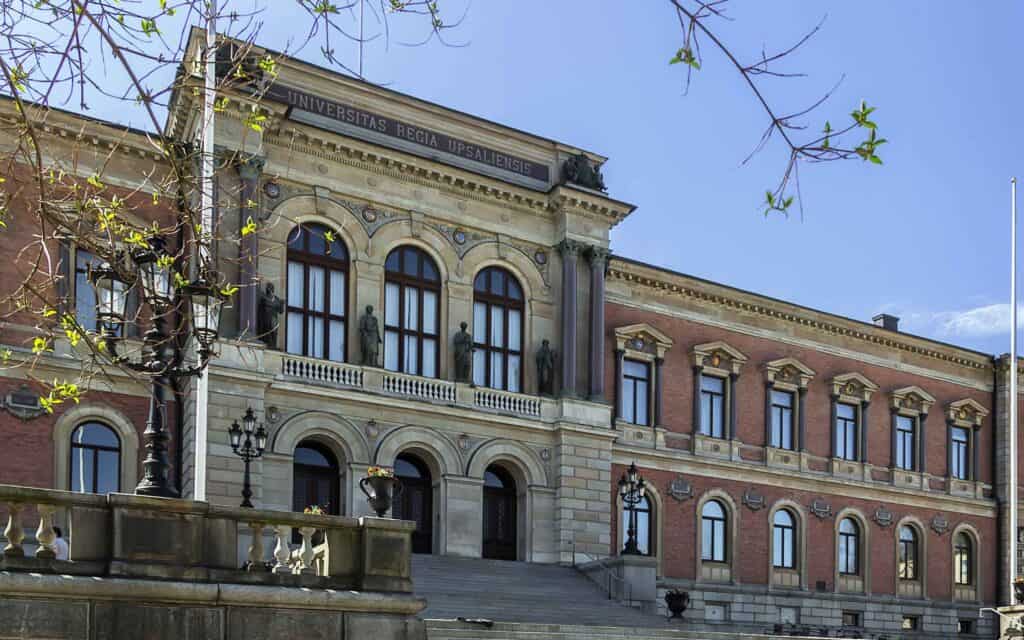
The case concerns a teacher at Uppsala University who taught a classroom-based course for several years. When he fell ill and was no longer able to teach the course in person, the teacher was granted permission to redesign it into a web-based distance-learning course.
“He redesigned the course entirely on his own, using his own equipment at home, and he saved the videos on his own platform,” says Claudia Guala, Chief Legal Officer at SULF. “He then linked the material to Canvas, the university’s learning platform.”
The teacher taught the course in this way for three terms, but then became so ill that he was unable to work at all. However, he agreed to allow the university to continue to run the course with substitute teachers. This continued for a further three terms until the lecturer retired in the summer of 2023.
“When he retired, he deleted all links to Canvas and all the copyright-protected material stored there, as he had finished teaching the course.”

Claudia Guala
Chief Legal Officer at SULF
According to the claim submitted to the Labour Court, the teacher learnt a few months later that the university had recreated his course using security backups and was continuing to run it using his recorded lectures.
“In the autumn of 2023, he contacted the university and told them that was not acceptable,” continues Guala. “He informed them that If they wished to continue running the course, they needed to agree on suitable compensation, otherwise they had to take it down.”
The claim states that the teacher and the university then reached an agreement that the university would cease using his copyright-protected material. However, Uppsala University continued to offer the course regardless, and that is what this case is about.
“There’s no established precedent on this matter,” says Guala. “This would be the first such case.”
The parties have held settlement negotiations, but they failed to reach an agreement. And if the parties fail to reach an agreement during the court proceedings, the Labour Court will have to rule on the matter.
“If that happens, the Labour Court’s ruling will become the legal precedent in this area for university teachers and researchers. At present, it’s covered by a generally accepted principle – a special exemption covering the intellectual property rights of academic staff, known as lärarundantaget – but there is no established case law. This would be the first such ruling.”
SULF is requesting the award of financial damages amounting to SEK 104,960 plus interest to the member for copyright infringement, as well as reasonable compensation for copyright for literary and artistic works amounting to SEK 500,000 plus interest.
Furthermore, the union has filed an interim application requesting that the Labour Court forbid, on pain of penalty, that Uppsala University continues to use the teacher’s course until the dispute has been completely resolved.
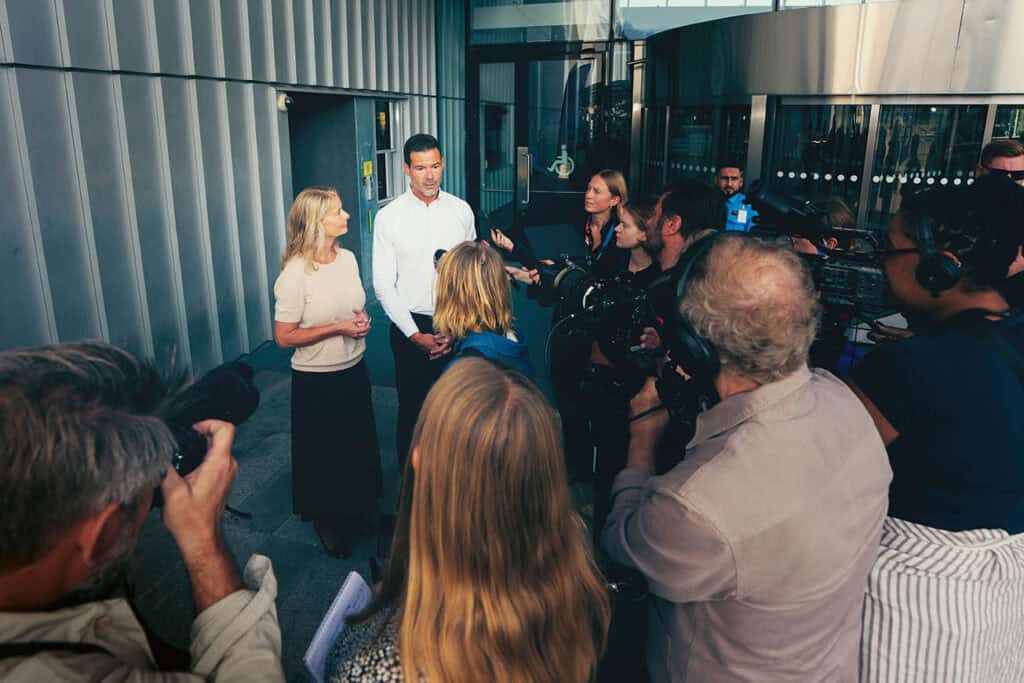
Dag Linde, Head of Negotiations at the HR Department at Uppsala University, comments on the dispute: “As is often the case in this type of matter, the parties are in agreement on some matters and not on others. We will address the points of contention in our response to the court.”
But fundamentally, isn’t the dispute about a matter of principle?
“It’s true that both sides acknowledge that the issue at stake is what basic rule applies here,” says Linde. “Is it the exemption covering the intellectual property rights of academic staff, as the trade union claims, or the rule of thumb, as the employer’s side believes? This has not been tested in court in Sweden, so it may well be that we will see a ruling on the matter now.”
The fundamental dividing line between the trade union and employer is clear. The union argues that there is a customary law regarding the generally accepted principle governing the intellectual property rights of academic staff, which means that the university does not have the right to use a teacher’s teaching materials without the teacher’s consent.
The employer argues, for their part, that the ‘rule of thumb’ applicable in the wider labour market also applies at higher education institutions. This means that the employer has a right of use regarding material created by an employee in the course of their normal duties or following the employer’s specific instructions. That right of use applies to the employer’s normal activities to the extent that can be foreseen at the time the work is created.
Johan Asker, the deputy head of unit at the legal department at Uppsala University, refers to the guidelines adopted by the university, which stipulate that the rule of thumb applies. SULF disputes this and consequently argues that the exemption covering the intellectual property rights of academic staff applies.
“That is precisely what this dispute between the university and the union is all about,” he explains. “Is there a rule of thumb or is there not? If you remove all the specific circumstances of this particular case, that is the fundamental question. As things stand, it will now be examined by the Labour Court. It will be extremely interesting to see how it turns out.”
SULF’s Chief Legal Officer, Claudia J Guala, agrees with the representatives from Uppsala University that this is essentially a matter of principle for the Labour Court that the court will rule on. But she disagrees with the university’s position and argues that generally accepted practice assumes that copyright belongs to the author. Furthermore, she maintains that the rule of thumb that Uppsala University’s argument rests on does not entitle the employer to the moral rights aspect of copyright and that “infringement of this copyright constitutes a significant part of this dispute”.
She also notes that Uppsala University is emphasising its own policy. “Our position is that a unilateral policy can’t override the law and established practice, so it can’t be used as grounds for claiming that copyright has been transferred to the employer. What’s more, the policy they refer to was put in place a couple of years after our member created the copyright-protected material in question, and therefore it can’t be applied retroactively.”
The proceedings in the Labour Court are likely to take quite some time.
“The next step is for the court to order us to respond to the claim,” says Dag Linde at Uppsala University.