

Grading exams has never been my favourite task. When reading 60 texts, all answering the same questions, a certain amount of repetition is to be expected. But this is something else. Everything is repeated – content, packaging, tone. It’s AI, of course. To varying degrees, AI has stepped in and minced down peoples’ thinking into something pre-packaged. Neat and tidy, presented in pre-made moulds, and I am constantly fed the same ground-up slop.
A few years ago, I could get somewhat frustrated by the language in exams. Few students had their punctuation in order; even fewer knew what a relative clause was. Today, these problems have vanished. There are no irregularities, no hesitations, no searching.
I ask some students why the texts look like they do. Some tell me it is simply because they are so good at writing “academic texts.” Can that really be? Has the Swedish school system improved so spectacularly in just a few years that the language problems I encountered not long ago simply have evaporated? And is it a coincidence that these problems began to disappear at the same time AI entered the picture? As someone primarily working as a humanities scholar, I am very cautious about making claims about correlations, but not even I can deny that the correlation option might seem like the more likely one.
But also, I do not feel these texts are academic. I see no traces whatsoever that whoever wrote them actually did any thinking. Surely, academic writing should communicate some form of thinking?
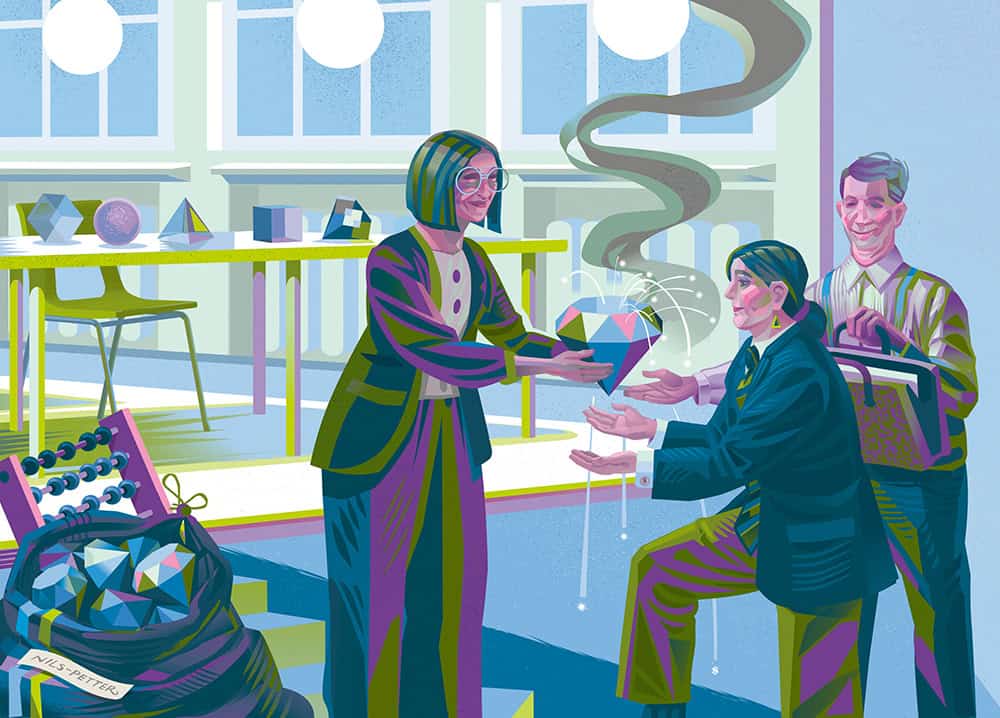
I want to sue OpenAI. They have ruined my work environment. I cannot be the teacher I want to be. I have always thought of my role as one of working together with students, through discussion and reflection, to identify and develop ideas. For me, writing is central to this. But I no longer see any thinking in what I read. I catch myself longing for spelling errors and conceptual misunderstandings. Where are they?! Where have all the incorrect uses of “you’re” and “your” gone? And why does losing them make me so sad? Before AI, those were the kinds of “mistakes” I felt made my grading experience a torment. Now they are all I long for.
I realize that my grief has something to do with the fact that learning so often happens in the irregularities, in the mistakes. When everything odd or ugly is removed, where does the learning even happen? I also mourn the loss of trust. Nothing can be trusted. Even those of you reading this are probably wondering whether I used AI. (No, I didn’t.) The trust arising between writer and reader, the sensation of them sharing something, is gone. I no longer know whose thoughts I am reading. Who am I letting into my mind? My heart? If someone moves me with their words, who moved me?
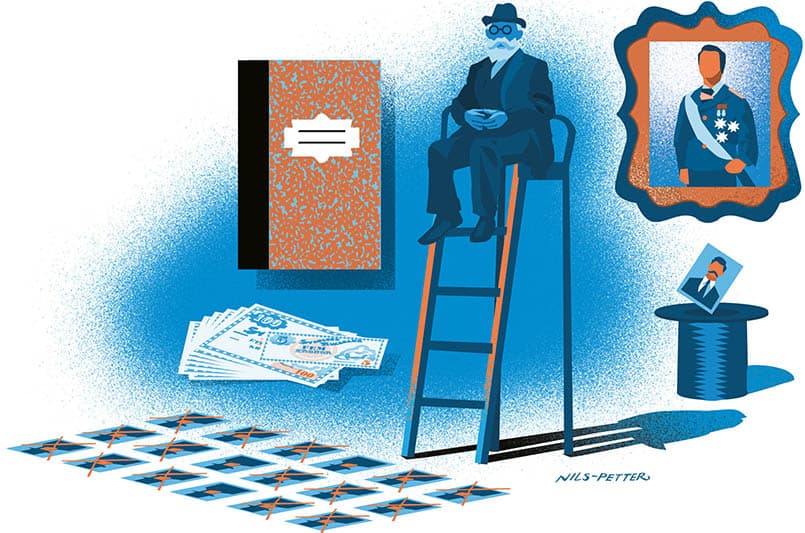
I start thinking about Horkheimer and Adorno and their idea of the culture industry, the culture factory that constantly churns out standardised mass entertainment and manipulates us all into passivity, manufactured contentment and fictitious needs. Everything follows the same templates. New packaging, same story. Some people are delighted by how easy writing is with AI. But I am not delighted. I want to scream when I am forced to read the same pseudo-individualised stories again and again, written to sound personal but all fading into nothing in their pale sameness.
And then it dawns on me. I have ended up in academia’s equivalent to Eurovision. I am listening to the same song, day in and day out, each one a copy of something else. Flawless, but overproduced, and I am trying to understand what distinguishes one version from another. But I do not know whether the right song won anymore, or whether the result was down to something gone wrong with the voting. And when I am almost done with the grading, all I can do is sit and wait for the whole thing to start again. The machinery of the culture industry is running at full speed.
Next week, it is time for the resits.