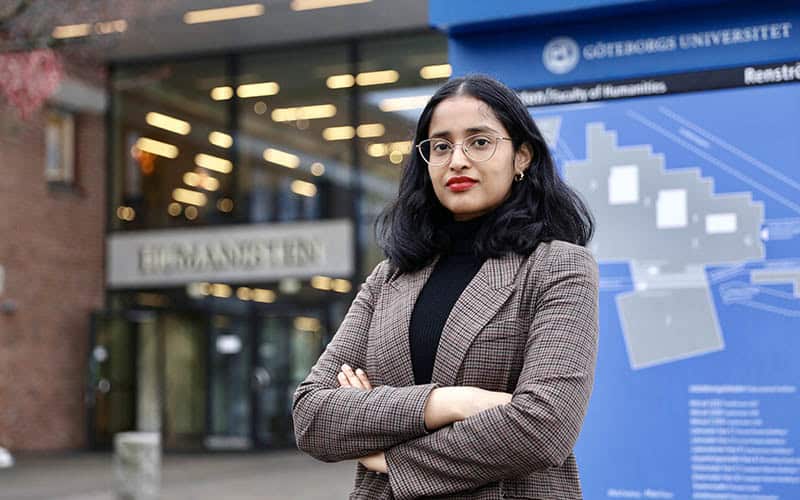

How do university lecturers perceive the dilemmas, opportunities and ethical challenges associated with generative AI? As part of her doctoral research, Alexandra Farazouli has interviewed 31 university lecturers, from five departments at a university in Sweden, about how chatbots and automated grading systems affect teaching practices and their day-to-day work.
“The most important finding is that the ethical challenges that arise from the introduction of AI in practices are actually not entirely new.”
Long before the breakthrough of AI, resource pressures linked to higher education expansion tended to reduce discussions of academic integrity largely to the question of how to detect plagiarism.
“Deeper values such as academic honesty, originality and respect for authors have been neglected. Then AI comes along, and suddenly we think it’s a problem. But it is actually a long-standing problem,” says Alexandra Farazouli.
In the thesis, university lecturers are compared to jazz musicians: responsive and attentive to signals of change, exploratory and improvisational. But to keep up with the pace of AI development they also need support, says Alexandra Farazouli.
“We need more education for teachers to be more AI literate. But we also need more space for teachers to reflect together, share good practices, examples and challenges that they face, because generative AI is a very fast-moving target.”
Alexandra Farazouli’s thesis
Title: Emerging AI and Ethics in Higher Education: A Technology Mediation. Perspective.
Subject: Education and teaching methodology.
Educational institution: Stockholm University.
Date of public defence: May 8th.