
“For me, communicating my research is part of being a researcher,” says Victor Galaz, a docent of political science at the Stockholm Resilience Centre at Stockholm University and programme director at the Beijer Institute for Ecological Economics at the Royal Swedish Academy of Sciences. He was named one of 2025’s ’super communicators of the year’ by the magazine Resumé and conducts research on topics such as AI and sustainability. He is also a cultural affairs columnist for the national daily newspaper Svenska Dagbladet.
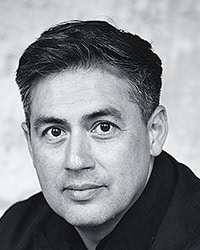
Victor Galaz
Docent at Stockholm University and programme director at the Royal Swedish Academy of Sciences
In his eyes, the roles of researcher and communicator are intertwined in such a way that one enhances the other.
“It is not as though you do research and then communicate about it separately. For me, these two roles go hand in hand. Partly because I believe that, as researchers, we have a responsibility towards taxpayers, but also because our research improves when we are forced to communicate it. In other words, you have to think things through. You have to ask yourself, ‘What evidence do I have to back this up?’ How am I going to explain that these things are connected?”
When it comes to planning communication, Galaz believes it is primarily a question of timing. You need to keep an eye on what subjects are being discussed in society at large.
“It is not about making huge plans for your communication. You can plan, but you need to plan flexibly. If you want to make an impact on certain issues, timing is everything. What is happening in society in general? What are people talking about? What are people worried about? Finding the right timing for the message you are trying to get across makes a huge difference.”
His second point is about being reachable.
“Accessibility is important for journalists. Be available when the phone rings and a journalist is looking for you. If you miss their call, ring back; reply to emails, even if you cannot do so straight away. Journalists work at a different pace to us. They are working on something that needs to be finished this evening, or tomorrow, or next week. So it is important to be available.”
And his third point is about being thoroughly prepared.
“When you communicate research, you need to be well prepared. It is very rare that you are just communicating a single research result; rather, what you are doing is communicating an entire field of research. So even if you are asked what you found in a study, you must always be able to explain the context of that study. You need to be ready to answer the broader questions.”
Do not speculate, he urges.
“If you are asked a question you cannot answer, just say so. Do not speculate. Refer them to someone else. It is crucial for our integrity as researchers that what we say is always based on evidence and our expertise.”
Galaz believes that the only way to become good at research communication is to do it again and again.
“You cannot read your way to becoming a good communicator You need to do it. So every time you present your research, you should see it as practice. Then it is not just good per se that you are talking to ten pensioners at Hornstull Library, but it is also good preparation and practice for something bigger that you might do in the future.”
What is your thought process when it comes to choosing where to make your voice heard?
“That depends on what you want. I do not think you can generalise, but people usually distinguish between narrowcasting and broadcasting. Broadcasting is when you write something in a major daily newspaper or appear on the television news or a radio programme.”
By broadcasting, you can reach the general public. Narrowcasting, on the other hand, is a different type of communication. It could, for example, involve sitting in a discussion with ten bank managers, he explains. Both narrowcasting and broadcasting are important in different ways. It depends on what you want to achieve.
“That is my point. If you are serious about research communication, you have to cover the whole spectrum,” he says.
Research communication is often handled by the communications officers at the higher education institutes’ faculties. Charlotte Ståhl is a faculty communications officer at the Faculty of Social Sciences at Umeå University.
“First, you have to ask yourself: what do I want to achieve with this communication?” she says. “What is it that I want to say, and who do I want to reach? From there, we can work out, for example, which channels and what times are suitable. Quite simply, the who, how, when and what.”
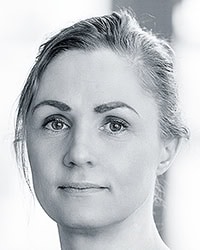
Charlotte Ståhl
Faculty communications officer at the Faculty of Social Sciences at Umeå University
Higher education institutions often use press releases.
“They is a form of communication aimed primarily at the mass media,” says Per Melander, a faculty communications officer at the Faculty of Humanities at Umeå University. “And it is, of course, a way of reaching out. You hope and believe that the media will be interested in what you are presenting,”
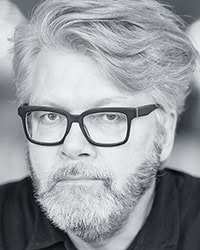
Per Melander
Faculty communications officer at the Faculty of Humanities at Umeå University
But the capacity to reach out with the help of communications officers is broader than simply sending out a press release.
“Ten to fifteen years ago,” Melander explains, “we relied almost entirely on the traditional media picking up what the university presented. Today, we are almost like a media agency, in the sense that we produce an incredible amount of our own content, including written material, moving images, photos and so on.”
One tip for making your research visible in the longer term is to write about it on Wikipedia.
“If you are a researcher who wants to reach and engage a large audience, you should write articles on Wikipedia. It may take a bit of time to write the article, but once you have done it, you might only need to spend fifteen minutes a month maintaining the page.”
Another tip is that researchers should put a good presentation of both themselves and their research on the university’s website.
“Our own web analytics show that traffic to our pages is driven by people searching for a topic. If we have a hit on that topic, there is a good chance the searcher will find it. That is a fairly simple way to reach an audience.”
Melander urges researchers not to leave things until the last minute:
“Get in touch with us well in advance. That way, you will have time to be more strategic and thorough. So that is an important part of it.”
Draw up a communication plan
A communication plan should answer the questions why, who, where and what.
- Why do you want to communicate?
- What do you want the audience to know, understand or do?
- Who is affected?
- What is their attitude to the subject?
- What is important to them?
- What prior knowledge do they have?
- Where and when will you communicate?
- What and how will you communicate?
- What are your messages? Have you double-checked the facts?
Source: The Karolinska Institutet website