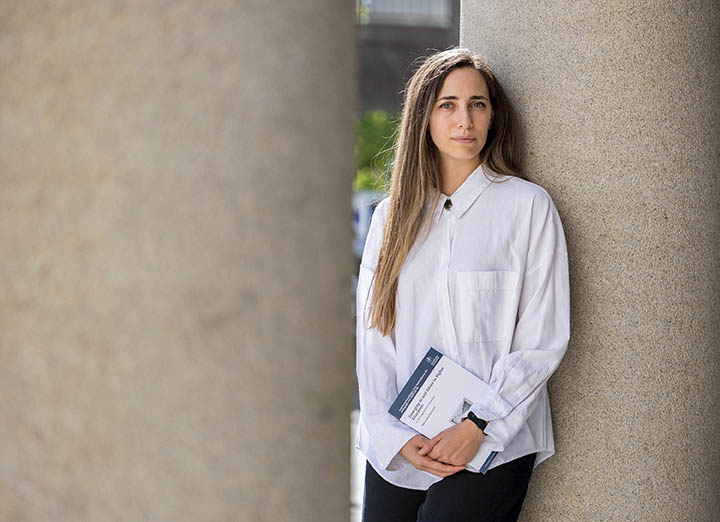
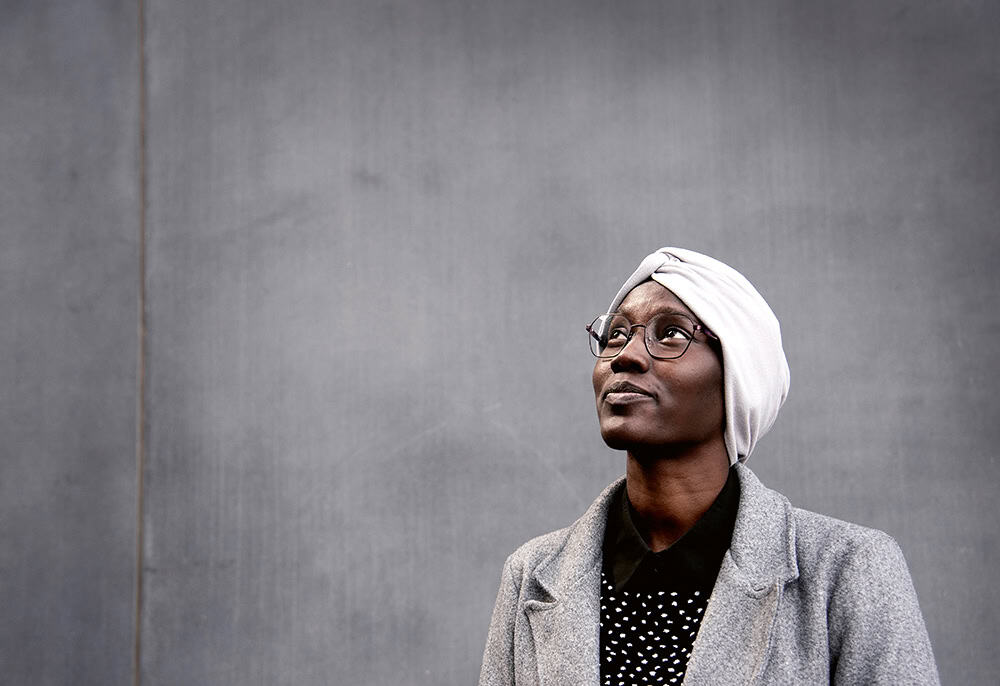
Wasma Amin Abdelgadir Ahmed meets us in the entrance hall of the Science for Life Laboratory in Solna. Cheerful and proud, she shows us around the building at Scilifelab, as it is commonly abbreviated. It is a research centre for bioscience, medicine and the environment run by the Karolinska Institute (KI), the Royal Institute of Technology (KTH), Stockholm University and Uppsala University.
This has been her workplace for close to two years. In her first year, she held a post as a research engineer funded by Scholars at Risk. She is now employed as a postdoctoral researcher in biochemistry at KI. She swipes her access card in the lift and begins to talk about just how much she is actually working at the moment. She is almost always the first to arrive in the morning and usually the last to leave. Aware that this is not sustainable in the long run, her job is a form of therapy for her right now. She has received professional help previously but needed to take a break from it, she says.
She grew up in Sudan and came to Sweden in 2023. Before that, she completed her PhD in genetics and molecular biology in Italy, where she had moved in 2019. For almost four years, she lived in an academic bubble. This was exacerbated by the pandemic, which brought Italy to a near standstill, she explains. She defended her thesis in April 2023, and she was so homesick for Sudan that she headed to Milan’s Malpensa Airport that very afternoon to fly home.
The plane had barely landed in Khartoum, the capital, before the civil war – which is still ongoing – broke out. Her brother and parents met her at the airport, and already on the way home, the car was stopped at military roadblocks. A week or so later, full-scale war was a reality. At first, it was only on television, but the fighting soon drew closer.
“The situation escalated very quickly,” she explains. “From waking up and seeing plumes of smoke in the distance, to opening the window and being able to hear the war, we were soon lying in bed and hearing on the street outside. All in just a few days.”
Going out was out of the question. Let alone going to the university, she continues.
“Everyone who was able locked themselves in their homes. Sadly, not everyone was as fortunate as I was. Some had no home left to take shelter in.”
The war was not the only reason Wasma Amin Abdelgadir Ahmed decided to leave Sudan for a second time. She had previously been a senior lecturer at a state university and describes herself as politically active. She has been on strike, demonstrated and protested, and she tells us that the regime’s view is that university teachers are not permitted to express political views.
“That was forbidden, but a few colleagues and I felt we could not remain silent. So I ended up on a list that made me a target for pressure from the authorities.”
When she returned from Italy, the entire legal system and society were collapsing, but that only made her an even bigger target. She was now regarded as the university teacher who had returned with even more aggressive political ideas about her country, she says.
“I had also been arrested at one of the previous demonstrations, so I was also on the list of people who had actively participated in protests against the regime.”
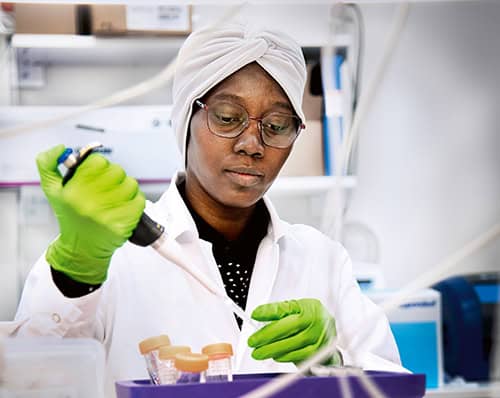
Photo: Kristina Sahlén
Sudan has both state and private universities, as well as universities run by the armed forces. Over the past four years – and even in the years before the war broke out – state universities in particular have been under intense political pressure, she explains. Academic staff who went on strike for higher wages and better working conditions were arrested. There is no academic freedom in Sudan, she says.
“Some lose their jobs, but the main tactic that has been used for a long time is social stigmatisation. Simply showing that someone has been arrested or harassed by the regime is often punishment enough in Sudan. By humiliating and belittling university teachers, a signal is sent to others that they will be next if they choose to follow the same path. Women are usually hit hardest.”
On top of that, she also found herself in a difficult situation with the man she was married to. During her time in Italy, her family had signed a marriage contract with his family. He works in academia and has strong links to the armed forces, she explains.
She did not need to be present for the marriage to be valid in Sudan. She describes it as an agreement based on religion. When she returned from Italy, she had to sign the papers, and according to tradition, a wedding ceremony was to follow. That never took place. Four years in Europe had made her view the arranged marriage differently. When she told the man that she wanted a divorce, he refused. That was when the threats started.
“First, he said openly that he was going to kidnap me from my home, and that he had the right to do so because he was my husband. That is true, too. By law, he can take me wherever he wants.”
By this point, her family had realised that the marriage was a mistake. The man began to threaten the whole family. He would take them to court and use his police and military contacts to get what he wanted. When she and her family realised the threats were serious, they changed tack.
“I adopted a calmer, more subdued tone towards him. I started answering when he rang and could listen for hours to his strange plans for our future together. I played along to buy time while we tried to find a way for me to leave Sudan,” she says.
The civil war in Sudan
Since April 2023, a has been raging in Sudan between the Sudanese Armed Forces (SAF) and the paramilitary group Rapid Support Forces (RSF).
More than 12 million people have been forced to leave their homes, and an estimated 4 million have fled to neighbouring countries. According to the United Nations, 25 million people in the country are suffering from acute hunger and 2 million are at risk of starvation.
Sources: The Office of the United Nations High Commissioner for Refugees (UNHCR), Human Rights Watch, the United Nations World Food Programme (WFP)
Because of the war, there were no functioning airports or border crossings. Her way out was a trek on foot, which she describes as six days of hell. She reached Ethiopia’s capital, Addis Ababa, and bought a plane ticket to Milan. That journey is still an unprocessed trauma, she says.
In Sudan, she is still regarded as married. She cannot go back.
“I will be taken by force and made to live with him and obey him without any rights of my own. He has the legal right to do whatever he wants to me without being punished for it, even to take my life. As a man whose wife wants a divorce, he would be seen by society more as a hero than as a criminal if that happened.”
Tears well up in her eyes and she finds it difficult to speak. She has kept most of her experiences to herself and has not spoken much about them. Today, in Sweden and at KI, she feels safe.
“Absolutely. I work in a wonderful place, and I feel privileged to be working at KI. Of my colleagues and other acquaintances, maybe 80 per cent have no idea about my background. Of those who actually do know, I think there are people who would be concerned if I did not turn up for work or if I started isolating myself. I feel well looked after.”
Wasma Amin Abdelgadir Ahmed has decided she will never return to Sudan. Apart from the fact that she would have to face the man she is still considered married to, Sudan is a dangerous country. Especially for women. Her parents and sisters have fled to Saudi Arabia. One of her brothers now lives in Egypt and another in Uganda, while one remains in Sudan.
“Women have been and continue to be subjected to widespread sexual abuse in the war,” she says, “particularly in areas where fighting is taking place. No woman is safe in Sudan.”
As well as the Scholars at Risk network paying her salary during her first year in Sweden, she still has regular follow-up meetings with a case worker. They check in on how her work is going and discuss future plans. But also how she is feeling.
“It feels good to have someone who can give you a push, so that you do not forget to think ahead. The contract I have with Scholars at Risk now is more of a mentoring arrangement. They no longer provide any financial support,” she says.
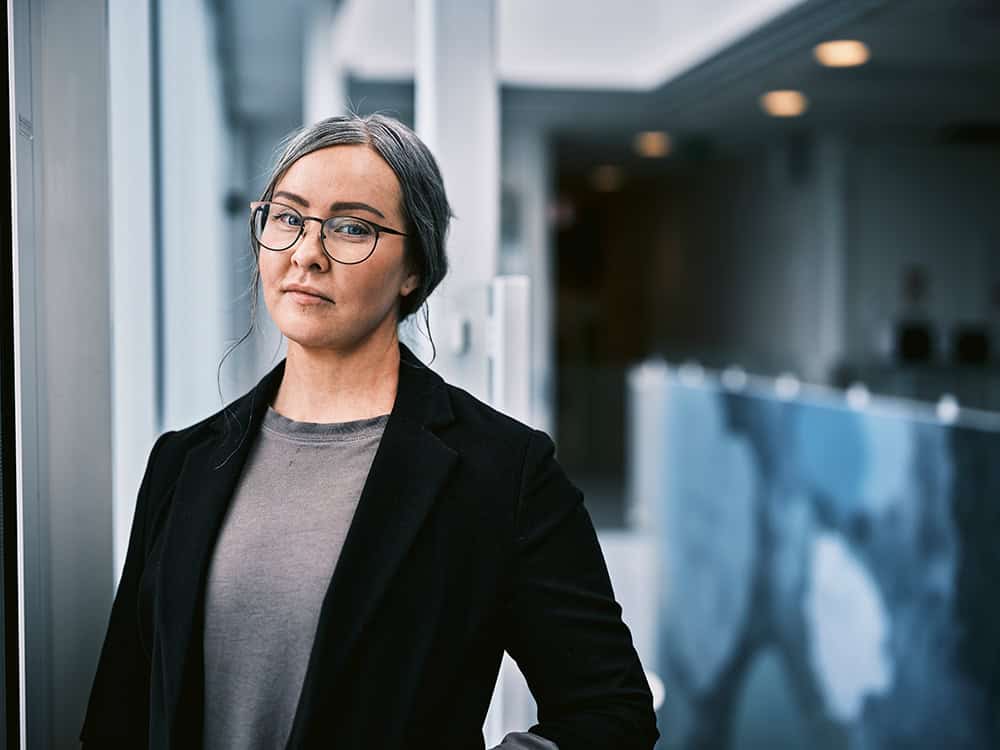
In an office at Campus Norrköping, part of Linköping University, the curtain rail suddenly comes loose from its wall mounting. Claudia Tazreiter, a professor of ethnicity and migration studies at Linköping University is trying to let in some light.
“Someone will probably need to come and have a look at this,” she says resignedly as she sits down at her desk.
She is a mentor to a researcher from Afghanistan, who, with the help of Scholars at Risk, is working at Linköping University. He has now moved on to a doctoral student position and Tazreiter is his supervisor. The mentorship involves providing guidance and support regarding the rules and culture within the higher education system in Sweden. It is also about building a network around the researcher, she says.
“What is needed varies from person to person, of course, but it might involve ensuring they are invited to speak at events, organising meetings with colleagues or exploring opportunities for them to teach.”
Claudia Tazreiter
Professor of ethnicity and migration studies at Linköping University Photo: Linus Hellerstedt
Researchers may need guidance to learn Swedish, but also help with practical matters, like visiting the Migration Agency with their family, obtaining a Swedish personal identity number or looking for accommodation. Although the Scholars at Risk international office handles most of the practicalities, Tazreiter acts as a sounding board. She also has recent personal experience. A few years ago, she herself moved from Australia to Sweden for work.
She is also Sweden’s representative at Scholars at Risk International and runs a course for students on academic freedom. At the moment, the organisation’s work is largely focused on the situation in Gaza and the West Bank, she explains.
“That is both urgent and difficult. Scholars at Risk offers Palestinian researchers access to funding and mentorship, but it is extremely difficult for them to leave the country and obtain visas in other countries.”
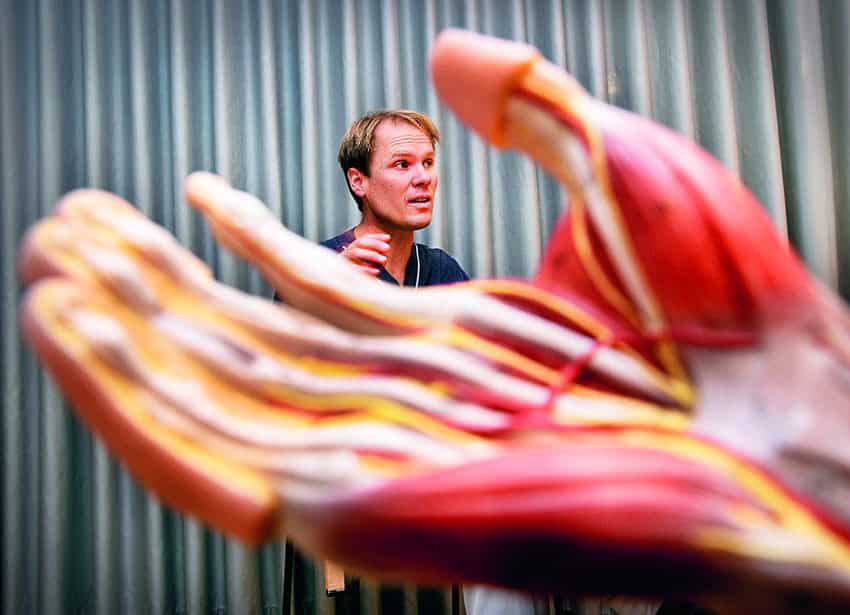
In Yemen, a civil war has been raging since 2015, and the situation for the country’s university teachers and researchers has deteriorated steadily over time. Those who teach Western literature are particularly vulnerable, says Anees Al-Najjar, a docent in English and literary studies at Linnaeus University in Växjö. He and his colleagues in Yemen were constantly subjected to threats and pressure from militias and religious groups.
“They claim that we are propagating Western religions and principles,” he says. “They see the students’ hairstyles or the girls’ tight-fitting clothes as a direct result of this Western-style education that they believe we represent. The mixing of male and female students is also frowned upon.”

Photo: Jonas Ljungdahl
He has been subjected to lengthy interrogations and accused of trying to distort his students’ worldview. He has received threats via text message and been berated by his superiors, he explains.
Al-Najjar grew up in Yemen but spent several years living in India, where he studied for a master’s degree and obtained a doctorate. When he returned to Yemen, he worked at the Department of English at the University of Ibb. There, he was first promoted to associate professor of English literature and translation studies in 2012, and later to head of department, the position he held when he decided to flee.
In Yemen, he expected to be arrested every day, but it was not the thought of a trial or a prison sentence that worried him. There is no justice system in Yemen, he says. They kill you. You just disappear. Several hundred academics have been killed or abducted, never to return.
The civil war in Yemen
The civil war in Yemen is being fought between the country’s government and the Shia Muslim Houthi rebels. The current conflict escalated in 2015 and stems from disputes over the political leadership that emerged in the country following the Arab Spring in 2011. The United Nations estimates that 22 million people in Yemen are dependent on humanitarian aid. It is considered a proxy war, with Saudi Arabia supporting the government and Iran backing the Houthi rebels.
Sources: The Swedish Institute of International Affairs, Sverige för UNHCR
He describes how he was contacted by a professor at a university in London, who asked him about his views on higher education in Yemen. After exchanging a few emails with the person, he deleted the conversation. You cannot rely on the person you are in contact really being who they claim to be.
“It is impossible to work under such circumstances,” he says. “How can I teach or conduct research when I cannot trust anyone?”
When Al-Najjar realised he could not stay in Yemen, he contacted Scholars at Risk. He documented the threats he faced and explained why he needed help. It took a long time to get support, he explains, but once he did, he was keen to go to a country in the West. After receiving offers from both Italy and Sweden, he chose the latter. He arrived in early 2025 and was given a post as a visiting researcher at the University of Gothenburg. As his one-year term of employment was drawing to a close, he had just been reunited with his family.
“When my family arrived in Sweden, I only had two months left on my contract,” he says. “It was incredibly stressful not knowing what was going to happen, and I needed to be able to support them.”

Photo: Jonas Ljungdahl
Once again, he turned to Scholars at Risk, who helped him to send his applications, references and qualifications to various higher education institutions. After being invited to a job interview at Linnaeus University, he was offered a one-year contract as a full-time researcher. He describes himself as very fortunate.
He has a mentor at Linnaeus University and is in regular contact with a representative from Scholars at Risk. Ideally, he would like to receive support from the organisation in more situations, for example with matters at the Tax Agency and the Migration Agency. His second-eldest son has now turned 18. When Al-Najjar applied for an extension to his residence permit, he understood that it is not certain that his son will be allowed to stay. The family is still waiting for the Migration Agency’s decision.
“My wife says that if he has to go back to Yemen, she will go with him. A child without parents has little chance of a good life in Yemen. It is strange that Sweden considers an 18-year-old to be independent. In Yemen, you first need to get an education and get married. You are considerably older than 18 when you are responsible for yourself.”
His eldest son is still in Yemen.
“He is smart, but it is difficult. When we are in touch, I keep telling him to just keep quiet, lie low and get on with his work. I try to make sure his uncle and grandmother keep an eye on him. It is a very difficult situation.”
When his current employment contract expires, he would like a new one, and he is determined to work hard to get it. He says he sleeps very little and works long hours.
“Sometimes I do not go to bed until two or three in the morning. I am just trying to keep working, to get published and to be better. Because of the war, I have not been able to work for a very long time. It has just been about surviving. So there is a lot of catching up to do.”
Anees Al-Najjar would love to start teaching again. In Sweden, so far, he has only given one guest lecture, on 17th-century metaphysical poetry.
“I have felt that people in Sweden do not really trust my teaching skills,” he says. “But I hope I will get a chance so they can see that I can do it.”
What is Scholars at Risk?
The Scholars at Risk (SAR) network was founded in 1999 at the University of Chicago. SAR works to promote academic freedom worldwide and to find safe havens for vulnerable researchers.
SAR Sweden was launched in 2016. It consists of around thirty Swedish higher education institutions and organisations that coordinate placements for researchers in Sweden. SAR Sweden receives funding from a number of organisations, including the Swedish Research Council and the Swedish International Development Cooperation Agency (Sida).
Around fifty researchers have received help from SAR Sweden to find a position at a Swedish higher education institution during the ten years the network has been in existence. Some of them have held several different forms of employment in succession.
Several Swedish higher education institutions have also taken in researchers from Ukraine since Russia’s invasion of the country in 2022. Most of these have arrived under the European Union’s Temporary Protection Directive, not via SAR.
Sources: Scholars at Risk (SAR), SAR Sweden