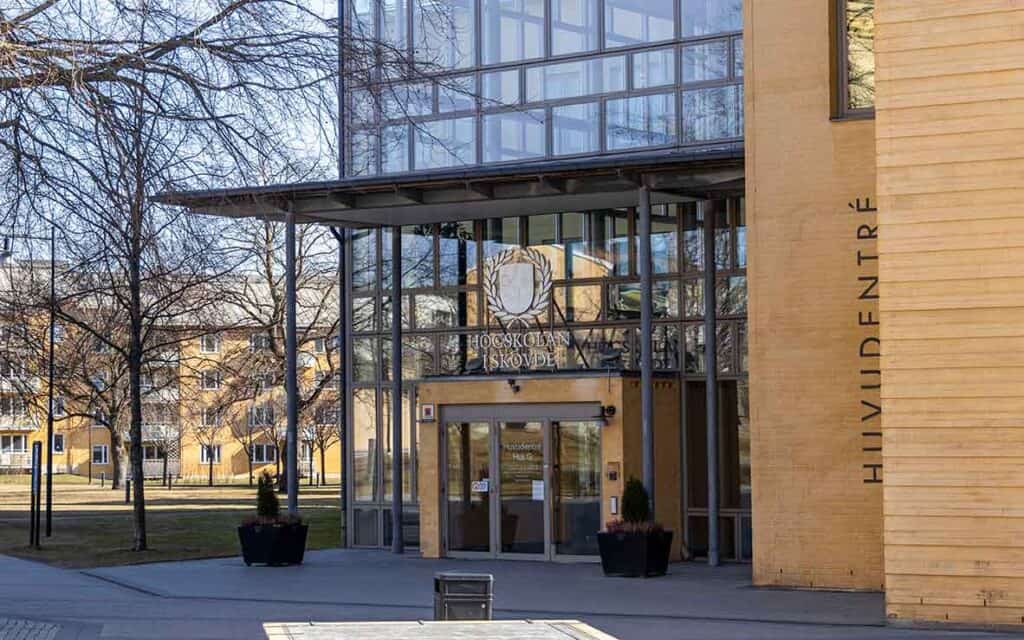
Last May, 21 employees at the University of Skövde lost their jobs, as reported previously by Universitetsläraren. The reason given was the university’s budget deficit. During the autumn, SULF and the local Saco-S association in Skövde held negotiations with the employer regarding a number of the members involved, who they believe should not have been made redundant.
Those negotiations ended in disagreement, and SULF has now submitted an application for central dispute resolution to the Swedish Agency for Government Employers, which is the university’s representative when negotiations are escalated to central level. A first meeting is scheduled for the end of January.
The union believes that five of the employees have been made redundant without just cause, in violation of the Employment Protection Act (LAS). The employer has also failed to follow the rules on order of priority in redundancy processes, the union writes in its call for dispute resolution negotiation.
“We think that the employer has deviated from the law, (LAS, editor’s note), and from the collective agreement in how the order of priority groups were drawn up,” says Angelica Lindlöf, chair of the local Saco-S association at the University of Skövde. “We also think that the redeployment assessment process has not been entirely satisfactory and, above all, that there is insufficient documentation.”
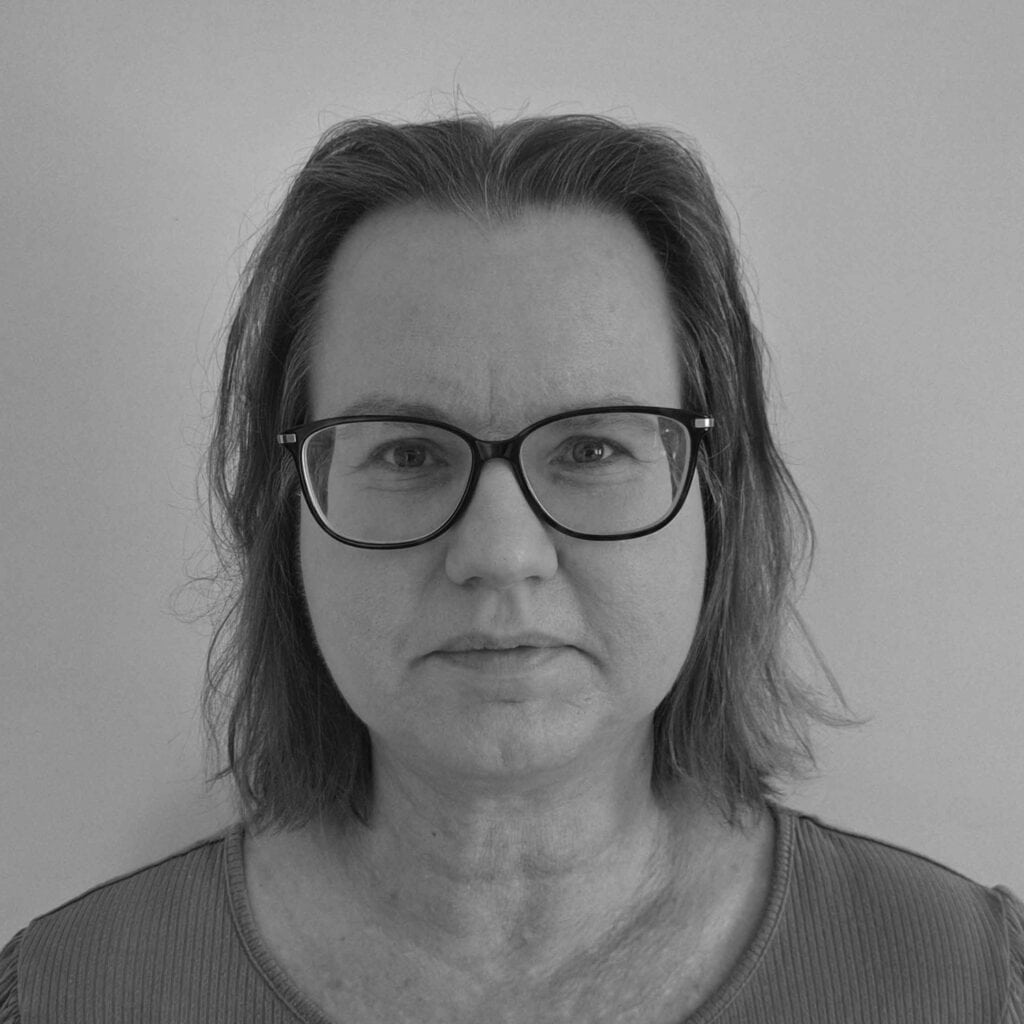
Angelica Lindlöf
Chair of the local Saco-S association, University of Skövde
Universitetsläraren has spoken to several of the members concerned. One of them expresses a suspicion that the employer has arbitrarily selected who is to be made redundant in advance and then organised the order of priority groups to fulfil this aim. That the employer has simply taken the opportunity to make redundant those people that the employer had already wanted to get rid of for some reason.
“The employer then seems to have been determined to follow through with its plan at all costs, throughout the process,” they tell us.
They go on to describe a specific situation that they believe may be the reason why the employer chose them.
“It is clear that they have taken liberties with the order of priority groups in ways that are not in accordance with the law or based on the actual work performed by employees,” the member says. “Instead, in the case of myself and several others, it seems that it has been more important for the university to silence critical voices that have pointed out shortcomings or suggested improvements.”
Local Saco-S chair Angelica Lindlöf believes that the union was not given sufficient information ahead of the negotiations to be able to reach agreement with the employer. “We also think that there is too much variation when it comes to the order of priority groups. I am not saying that we think all the groups are completely wrong, more that there is a scale that goes from okay to wrong.”
She understands that the employer did not want to prolong the process, out of consideration for the employees involved. However, after the union’s criticisms, she believes that university should have taken a step back and reconsidered how the order of priority groups was created.
“We would then probably have come to an agreement. When it comes to the redeployment assessments, we also think they could have revisited the process and documented it better.”
SULF is claiming SEK 300,000 in damages for each of the five members, made up of general damages and damages for breach of the collective agreement. Additionally, it is claiming SEK 150,000 per member in damages to the union itself for breach of the collective agreement.
The employer has declined to be interviewed. In an email to Universitetsläraren, Ulrika Dagman, Acting HR Director at the University of Skövde, writes “As this is no longer a matter for us as a state agency, but for the Swedish Agency for Government Employers, and because it is also an ongoing process, we are unable to comment at this time.”