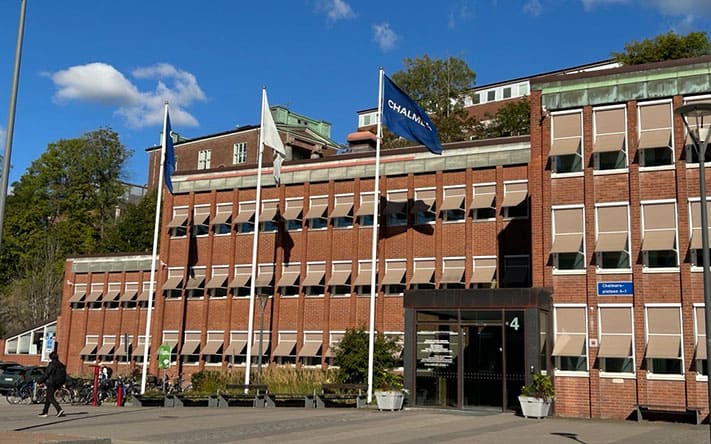
Last summer, Chalmers decided to introduce a new staff structure, to be implemented by the end of the year. One path is that of researching senior lecturer, with the possibility of being promoted to professor; the other is faculty teacher, for employees who will mainly teach and not be able to be promoted to professor.
Maria Elmquist, the Pro-Vice-Chancellor for Leadership and Equality, says the new structure is part of Chalmers’ strategy to become one of the leading technical universities in Europe.
“We are already very good at education, and we are very good at application and external collaboration. But when it comes to research, there is scope for us to improve further.”
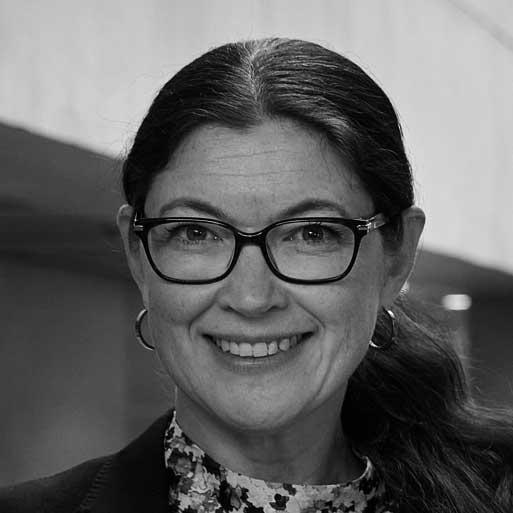
Maria Elmquist
Pro-Vice-Chancellor, Chalmers University of Technology
In order to strengthen research, Chalmers wants to avoid spreading its research funding too thinly.
“This whole new staff structure is the result of our ambition to provide better basic funding for our researchers,” says Elmquist. “We also need to continue to deliver really good teaching, and to ensure that we have created a faculty teacher path for those who primarily work with teaching and pedagogical development. I would like to add that the majority of our teaching will still be carried out by senior lecturers and professors.”
There will be an almost watertight division between the senior lecturer track and the faculty teacher track.
“I think that is what is causing the most concern: we have said that when you have a position, that is the position you have, and if you want another position, you need to apply for it in competition with other applicants. We want to ensure clarity, transparency and fair recruitment. The negative consequences are that there will be less flexibility and that people may feel that they are being boxed in.”
Faculty teachers will have 20 per cent of their working time allocated to professional development, but they will not be able to apply for external research funding and thus ‘buy themselves out’ of teaching.
“No, they will not be able to do that. They will work 80 per cent with teaching or teaching-related duties. That is so we can meet the organisation’s need for teaching resources. But they will also be important for continuing to develop the teaching at Chalmers.”
Elmquist emphasises that the placement of staff in the new structure is based on the tasks people already have, and that there will be a dialogue with each employee.
“The people that we are proposing for teaching positions are those who primarily work with undergraduate education today. Those who both teach and are active researchers, applying for funding and publishing, will remain senior lecturers, with an ambition to raise the level of their research in the long term.”
The idea is that the demands on researchers will gradually increase.
“But we are not demanding that they will be world-leading researchers tomorrow. This is a goal for the next ten years or so. In the long term, senior lecturers at Chalmers will be at the equivalent of docent level, but we will have a transition period that I estimate could be five, six, seven years, when senior lecturers continue to acquire further qualifications along the research track.”
The reorganisation has caused concern among staff. One senior lecturer that Universitetsläraren spoke to was still waiting for a decision on where they will be placed.
“If I were to be reclassified as a faculty teacher, that would be devastating for my research and my career. In the short term, there is a danger that the research projects I am involved in will not be completed. Furthermore, I will never be able to apply for new grants to increase my research time, which in practice also makes it difficult to be able to supervise PhD students. And I will never be promoted to professor.”
The trade union has been involved in the process.
“We have taken part in several rounds of consultation,” says Peter Hellqvist, chair of the local Saco-S association at Chalmers.
“Our ideas and opinions have been taken on board in some areas, while we have been less successful in others.”

Peter Hellqvist
Chair of the local Saco-S association at Chalmers.
He underlines Saco-S’s fundamental position:
“Our main approach to this is that the faculty should of course both teach and conduct research. That is what defines a university and makes it unique. And it also provides greater flexibility, both for the university and for the staff, although of course in some cases there may be specific reasons to make exceptions to this main principle.”
“I think it is very important that people are placed correctly in the staff structure according to their interests and who they are as individuals,” Hellqvist continues. “That is what drives employees to perform at their best. If they are put in the wrong place, the danger is that they will lose motivation and drive.”
A new staff structure
Chalmers is introducing a new staff structure at the end of 2025.
In the new structure, two career paths will exist:
Researching senior lecturers with the possibility of being promoted to professor.
Faculty teachers, who will mostly teach and who cannot be promoted to professor.