
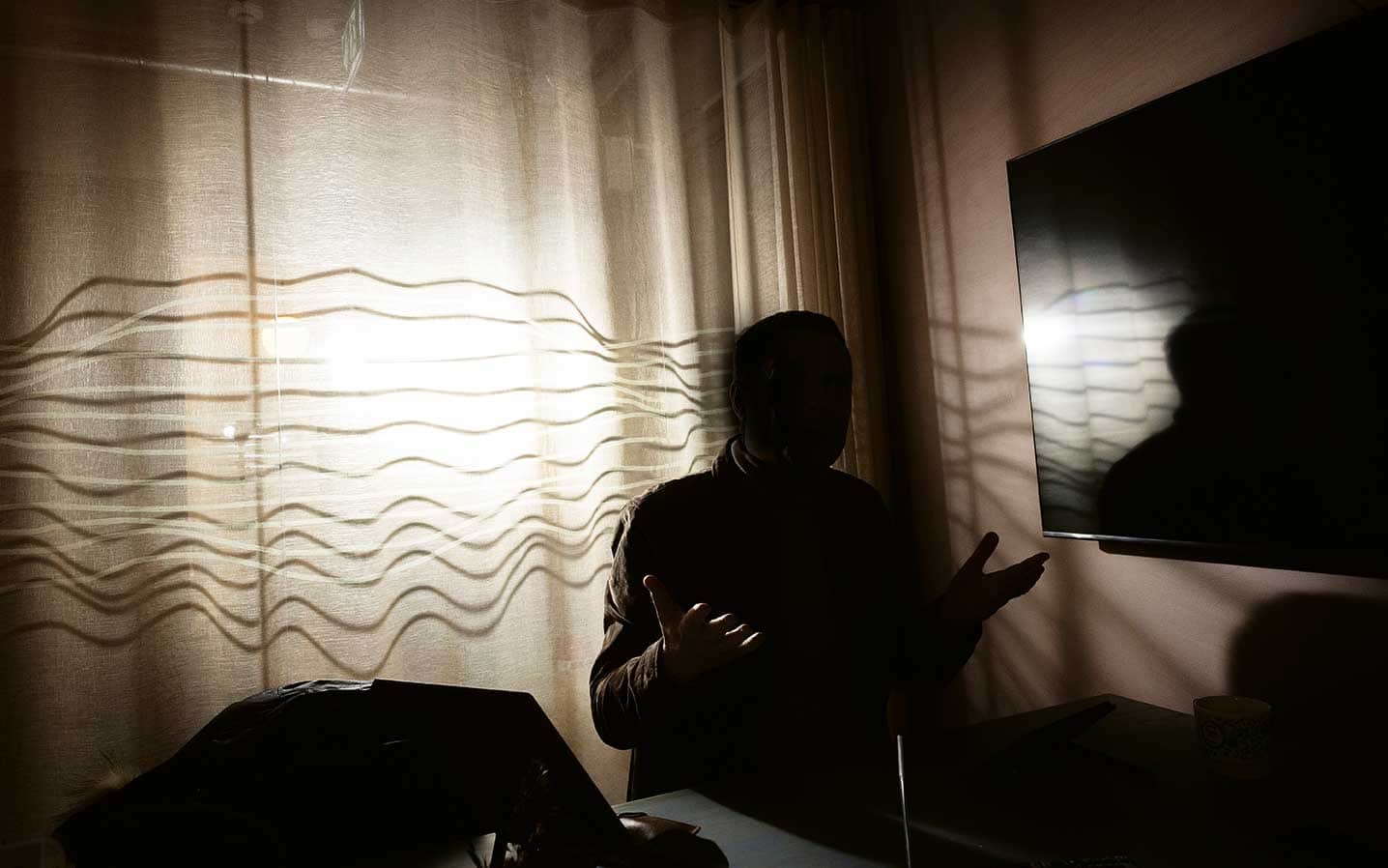
Adam recounts methodically how, in his view, he was manoeuvred out of his job by his employer. He is not particularly angry. There is nothing strange about the fact that his employer, a university in southern Sweden, needed to let staff go. There were obvious financial reasons behind the redundancy decision, and when it comes down to it, someone has to be impacted. Unfortunately, this time it was him, he tells us.
After a while, Adam’s voice switches from this methodical, explanatory tone. He is disappointed, sad and worried. When the university first announced that a number of employees would be losing their jobs, Adam did not think he would be one of them. He had been working in the state sector for quite a few years, significantly longer than many of his colleagues, he felt. Redeployment assessments were carried out, and when Adam was called in for a private meeting and saw for the first time a list of the skills his employer considered necessary for him to keep his job, his impression was that the process looked rigged. He believes he was singled out from the start.
He talks about a few occasions when he was perceived as a “difficult employee.” He has had a couple of disagreements with a manager in recent years. Nothing personal, just conflicts about differing opinions. Adam cannot know for sure exactly why, but to him it seems clear that his employer singled him out when the opportunity presented itself, constructing reasons retrospectively to justify the decision to give him notice of redundancy.
That meeting was attended by his immediate manager and a representative from the HR department. Adam had sent in his CV, but he still had no idea that he might be at the top of the list of those who would be let go. He was shown the document, which resembled a job description in a recruitment advertisement.
“Almost the only thing that related to my field was the document heading,” he says, “and that was when it hit me. My worldview began to crumble a little.”
At first, he reacted emotionally inside. Then he started to reflect and reason with himself.
“I read it and felt that it had nothing to do with my work or the work we do at our department. They hardly mentioned anything about the tasks we have in our subject area or what was planned for the future.”
On the other hand, there were things on the list that should not have been there, he continues. “One of the things highlighted as important is a very niche and limited part of what our field is about.”

After conversations with other colleagues impacted by the redundancy notice, he realised that he was not alone in feeling this way. There was a common pattern, he says.
“Several of us had had difficult discussions with someone at management level in recent years. We had raised objections to something or expressed criticism. It was quite obvious that we had all been in situations where we could potentially have been regarded as argumentative or disruptive.”
He is keen to emphasise that he is not particularly bitter. For him, it is primarily a question of fairness.
“My objections are not really because I was chosen and I am upset about it and therefore want to criticise my employer. They are because this was not done properly. For me and for several others.”
Adam sips a glass of water. He would prefer more light in the room, but the dimmer switch in the borrowed meeting room does not seem to be working as he wants. His fairly long notice period will soon be over, he says gloomily. He is looking for a job and has got quite far in a few recruitment processes. The other day, he found out that an internal candidate had been chosen for a position for which he had interviewed.
“What has happened to me is, of course, a very challenging situation, and there is a risk that I will see a drastic deterioration in my financial situation. I have children at home and an apartment with quite a high rent. So in every way, this is an unfortunate situation that I wish had not happened to me.”
He is not panicking yet.
“There are no things in life that are only negative, and I have made it a survival strategy to focus on the positives. The small opportunities. Besides, you probably need to be shaken up in your professional life sometimes too. I just wish I had been shaken up under better circumstances.”
Redundant teaching and research staff
Universitetsläraren has analysed redundancies due to lack of work at 35 universities and colleges between 2020 and 2025. A total of 2,457 people have been made redundant. Of these, 1,045 were members of the teaching and research staff.
Source: The higher education institutions
Adam is not alone in his situation. In recent years, a wave of redundancies has swept through Swedish universities and colleges. Last year, 309 university teachers and researchers were made redundant due to lack of work, according to figures collected by Universitetsläraren from 35 higher education institutions. The year before, the number was 232, and in 2022 it was 113. A total of 1,045 university teachers and researchers have been made redundant since 2020. When asked whether staff may be given notice of redundancy in 2026, 15 higher education institutions answered yes.
Statistics from the Swedish Higher Education Authority (UKÄ) show that 2024 was also the first year since 2006 in which the number of research and teaching staff at higher education institutions did not increase. Instead, this category of staff shrank by 460 individuals, or 340 full-time equivalents.

At another higher education institution, also in the southern half of Sweden, university teacher Sara has just completed her very last day at work. She was teaching on a recently discontinued contract education programme, but was also responsible for several other courses when her employer announced that the number of employees needed to be reduced. Sara had been working at the university in question for more than ten years, so when the news came, she could not imagine that she would be one of those that would be let go. However, it was obvious to her why the employer needed to make staff redundant, she says.
“It was very logical and very clear. You cannot keep on a lot of teachers who have been teaching on discontinued programmes. At the same time, I thought that because I also taught other subjects, it would not be a problem. Compared with others who had been teaching on the contract education programme, I was also one of those who had been there the longest. So I wasn’t particularly anxious.”
When the employer later announced the order of priority groups, Sara’s mood changed.
“I was actually a bit stressed out when I found out I was named in the group. I started wondering who else was in the same group. I asked around among my colleagues, and it turned out there were three of us.”
She is disappointed and feels a little cheated by her employer, she says. If the order of priority groups had been based on subject rather than on the discontinued contract education, Sara does not believe she would have had to leave. She does not feel that she has been given a clear explanation why it was done in this way.
“The employer says that it is a matter of negotiation confidentiality, and the union says that it was the employer that made the order of priority groups,” she says. “So it is easy to understand why I have colleagues who are starting to see a hidden agenda or some kind of conspiracy. That they have made the groups this way in order to get rid of me specifically.”
Sara makes it clear that she herself does not believe in such conspiracy theories. This is because she has been told, by people from the head of department down, as she puts it, that there were no personal reasons for making her redundant.
“I genuinely do not think it was personal. However, I am quite convinced that they did not actually know what they were doing.”
She describes how she has the special expertise needed to teach a number of courses that are still being offered. She finds it hard to believe that her employer will not have problems with those courses now that she has left.
“The employer did not do the work properly beforehand. If they had, they would have approached the creation of order of priority groups differently to achieve the outcome they wanted. The whole process was quite unprofessional on the part of the employer.”
She gives more examples of what underlies her feeling that the employer has handled the process unprofessionally. While dealing with the disappointment of being made redundant, Sara has had to fight hard to get time off to contact the Job Security Council (TRR) and to try to find a new job.
“The employer seems to have thought that when you give people notice, everyone will work until the bitter end. But suddenly some are on sick leave and others resign, and then you end up with a shortage of staff instead.”
Her manager finally freed up some time by removing Sara from one of the courses. But shortly before the course started, there was still no course coordinator, so she had to take care of it anyway, with a promise that the hours she freed up would be made available elsewhere later, which did eventually happen. She feels that she stepped up for her employer and showed willing without getting much in return.
“I have always done that, and really, it is not for the sake of the employer, but for the sake of the students. The alternative, bringing someone in from outside, would have been a much worse solution for them. If anyone asks me why I teach, it is to see the students grow. That is what makes it so enjoyable.”

Sara leans back in her chair as she talks. She is close to tears several times. She could not face attending the graduation ceremony last term. She talks about how some students realised that these were her last days at the university, and she received a number of messages thanking her for her work.
For her own part, she is not particularly worried about the future. She recently got a part-time job at another higher education institution. After a tip from a former colleague, she received a call from the employer inviting her to apply for an advertised position. It was a big boost to her ego.
“I was very happy and flattered, and I did not feel as useless as I did when I was given notice. When they basically say that you have no specialist competence. I felt that it was not important whether I got the job or not, I was just so happy that someone could see what I can do.”
She also has a secondary job that has grown a little over the past year. But she enjoys teaching and wants to continue with it.
“I have always loved seeing people grow. How students are slightly confused when they arrive for their first day, and when you send them out three years later, they’re ready to fly. That hopeless, disorganised one on the first course who was always late or didn’t bring what they were supposed to and ends up winning a prize for best essay. That’s when I feel it’s just so rewarding!
There is also another reason why Sara’s second job is taking up more of her time: “What I have learned from this, after careful consideration, is that I do not want to be in academia full-time.”
Footnote: Adam and Sara are not the real names of the people interviewed.