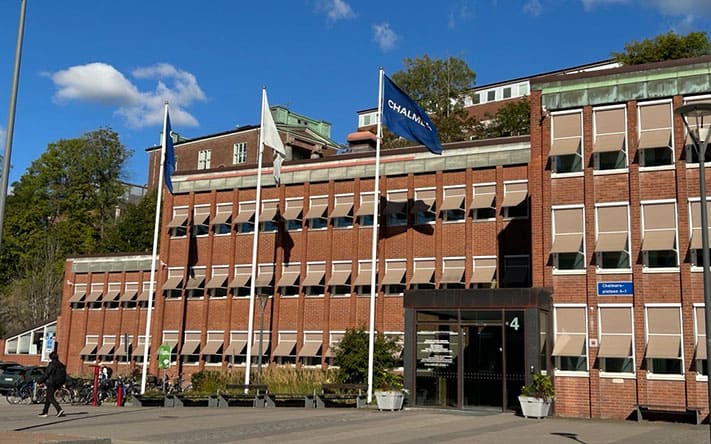

When Linköping University was in the process of hiring a professor of history last year, three external professors were tasked to write expert opinions on the applicants. In one of the expert opinions, extensive inaccuracies were discovered. One applicant found false information about themselves regarding both where they had obtained their doctoral degree and where they currently worked.
“I couldn’t quite believe my eyes, I have to say. I read it several times to make sure I hadn’t misread it.”
According to the applicant, their publications were, however, listed correctly, which was not the case for all applicants. Suspicion immediately fell on AI.
“It becomes a huge pedagogical challenge if we are to hunt down AI cheating among our students, when professors at the highest level are using it in this context. One of the most important tasks of trust that a professor can have is to review the competence of others.”
The applicant believes that universities should make a routine practice of distributing the expert opinions to all applicants free of charge, which was not the case in this instance.
“It is especially important now that we are seeing these kinds of things happening, that universities are transparent with their expert opinions and do not make it difficult for applicants to access them.”
Linköping University chose to disregard the incorrect expert opinion and increase the number of applicants they invited for interviews.
“But there has been no further follow-up on this. I am sure that the appointment turned out well in the end and that it was a competent candidate and all that. But what surprises me about the whole thing is that the university did not notice this before they started inviting candidates to interviews based on the expert opinions.”
Another applicant did not find any direct factual errors about themselves, but reacted to the comments about one of their articles.
“I thought that one of my articles was described in a way that showed that the person in question had not read or understood what the article was actually about.”
The applicant got information that other applicants reported more extensive inaccuracies and suspected the use of AI, but these suspicions have not been confirmed. The information provided to the applicants is that the expert opinion in question has been excluded because it does not meet the requirements.
“You can expect this to happen, that it’s not just students who cheat. This whole AI thing is so new, we all have to learn how to deal with it.”
With the rapid developments, the applicant believes that it will become more difficult to detect AI cheating.
Dean Ulf Melin is chair of the academic appointments board at the Faculty of Arts and Sciences at Linköping University and, according to his own statement, the person who decided to dismiss the professor due to quality deficiencies in the expert opinion. He responds to questions via email and confirms that the inaccuracies were discovered when two of the applicants for the professorship pointed out factual errors in the expert opinion.
“We went back to the documentation with the indications of inaccuracies and deficiencies and analysed it in depth again with these as a starting point. The conclusion of this comparison and in-depth analysis was that we agreed with the applicants’ comments about inaccuracies and quality deficiencies and contacted the expert.”
Ulf Melin
Dean Linköping University
In conversation with Linköping University, the professor clarified how and for what purpose AI had been used, and informed of errors that had occurred which should not be included in the statement. The professor expressed surprise that things had gone wrong and regretted the incident. They explained that it was due to a heavy workload and time pressure, says Ulf Melin.
“We emphasised that transparency and legal certainty are central to the process and that we therefore chose to disregard this expert opinion in the current recruitment process and to dismiss the expert from the task.”
Based on the university’s employment regulations, two external expert opinions are sufficient, so the academic appointments board was able to continue the recruitment process with the other two expert opinions as a basis. The university has now appointed a professor. Ulf Melin states that the academic appointments board at the faculty has updated its information to external experts with an explicit comment on the use of generative AI. In addition, they will be even more attentive to the quality of expert opinions in the future.
“However, I would like to return to the point that we must not be reactive here, but rather work more on prevention, informing and reminding ourselves that being an expert is a responsibility. It is a task to be taken seriously, and in that role, one must be able to stand by one’s text and review and ensure that it is of good quality,” writes Ulf Melin.
He agrees that “in the best of worlds,” the errors would have been detected by the board in their preliminary review, but that extensive opinions with many applicants make it difficult for outsiders to find factual errors within a reasonable processing time.
“The applicant knows their own work best, and I am not surprised that the best ability to see this type of deviation in the quality of opinions is found precisely there. That said, it is essential that we can also trust that the expert opinions we receive are of good quality and that the external expert who has been commissioned to review them does so in a thorough and credible manner and takes responsibility for their text.”
Universitetsläraren has reached out to the external expert, who is a professor at a Norwegian university. They have not responded.