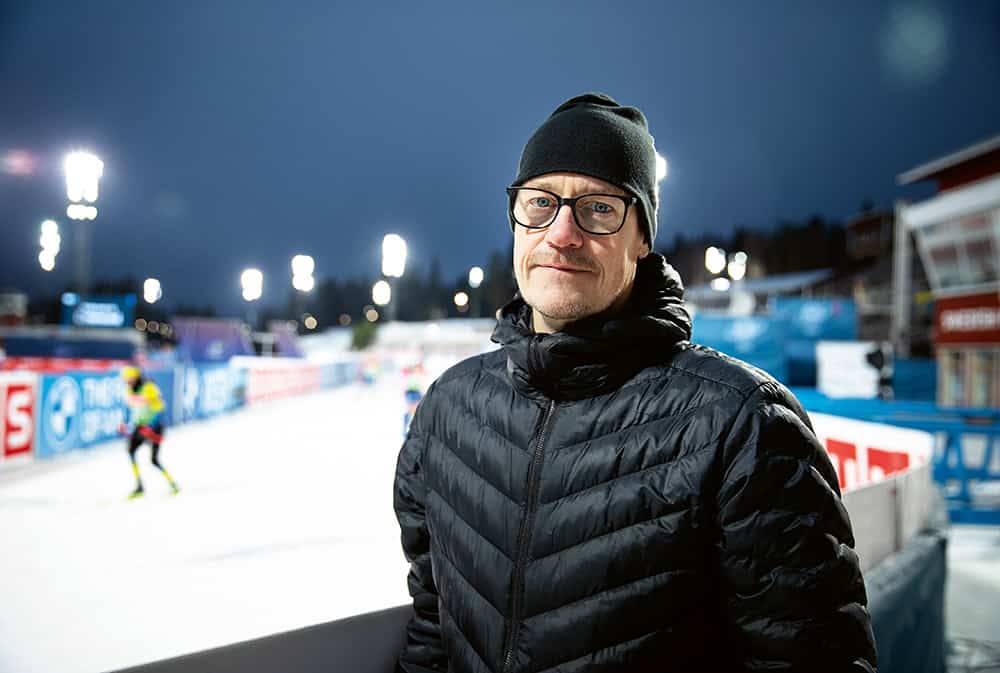
Journalist Martin Schibbye spends day after day in courtroom 34 of the Stockholm District Court at Scheelegatan 7. He has found himself a comfortable spot in a corner at the back and reports extensively on WhatsApp for anyone interested in the ins and outs of the trial. Its main focus has been on Lundin Oil’s responsibility for aiding and abetting violations of international law in South Sudan (then southern Sudan), between 1999 and 2003, when Lundin Oil was drilling in search of oil. The defendants are Ian Lundin, Chair of the Board, and former CEO Alex Schneiter.
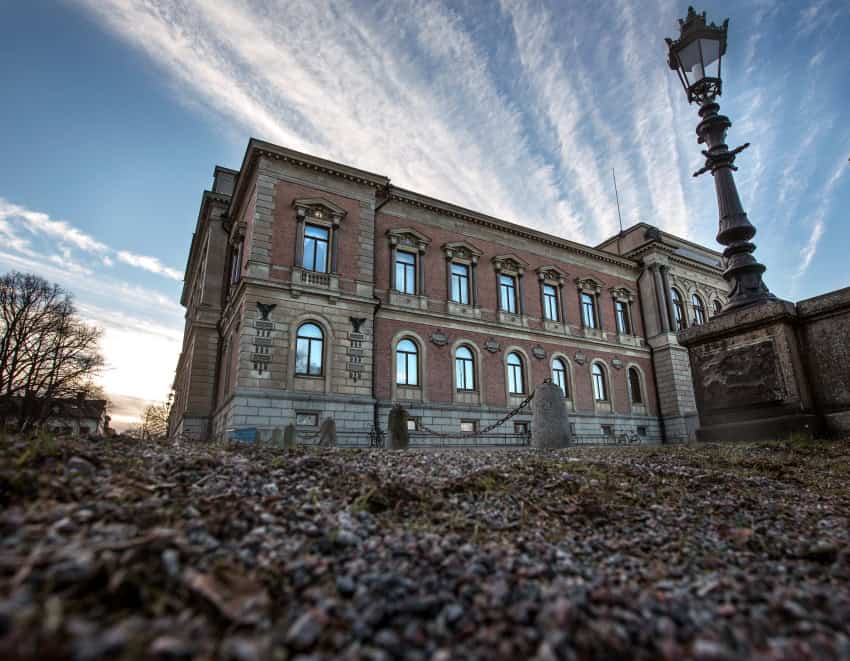
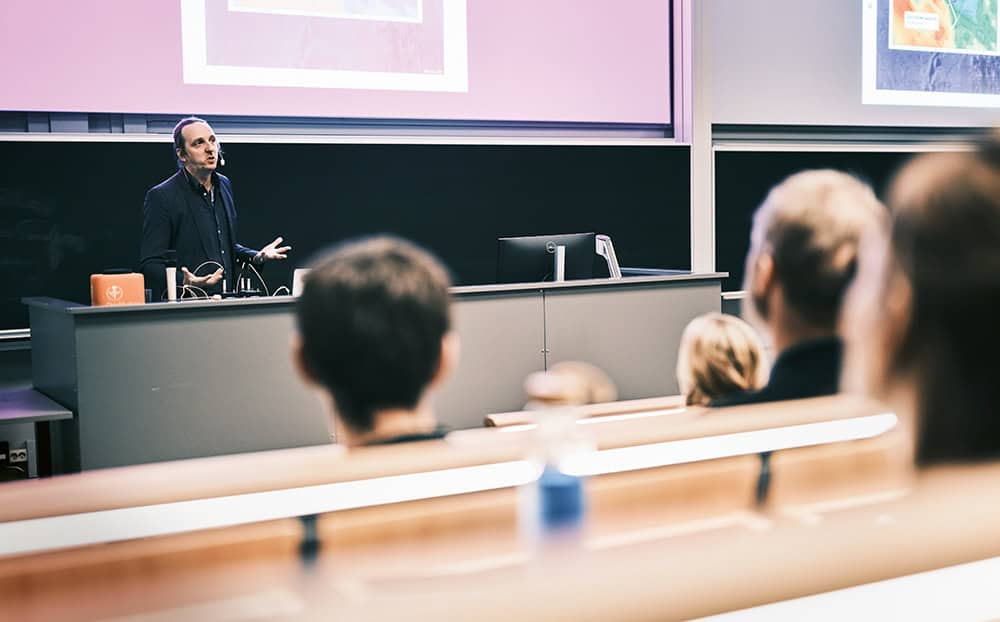
But right now, Schibbye is in a different place entirely, at Stockholm University. He is the editor of the news reporting website Blankspot and is here to talk about the trial, together with researcher Isabel Schoultz. She has been invited to describe the research project, but her train has been delayed so he will have to start. The lecture is part of a course in green criminology, and Schibbye is dressed in a jacket and shirt, with his hair in a bun. He tells the students that he studied here once upon a time, economic history, and that he wrote his master’s thesis on Swedish foreign trade in the 18th century. He studied the debate in Parliament about the acquisition and divestment of the colony of Saint Barthélemy in the Caribbean, but eventually felt that it was time to “let the dead bury their dead” and didn’t want to come 200 years too late to everything. So, he enrolled on a postgraduate course in journalism for, as he puts it, overage graduates. Since then, he has been a freelance journalist, focusing on forgotten, under-reported wars and conflicts around the world.
However, he begins his account of what the trial is about by rewinding the tape to 1997, when Lundin Oil signed a deal with the Sudanese regime (or government, depending on how you choose to express it). We get to watch a TV4 interview with Adolf Lundin, Ian Lundin’s father, and it is like travelling back in time. He expresses himself in a way that probably no business leader would today. Schibbye says that the interview gives a good picture of both the time when the interview took place and the ethical and moral discussions that raged until the trial began.
In Lennart Ekdal’s 1997 interview with Adolf H. Lundin, the tanned business executive says that they must treat the Sudanese regime as a normal negotiating partner and that the Lundin corporation has oil in its veins, not blood. The only thing that matters for the company is searching for oil, and they take no ethical considerations into account whatsoever in their negotiations. By finding oil, the company will also improve the prospects for democratisation of the country. Adolf Lundin talks about ”Darkest Africa”, saying things like ”We are the spearhead of capitalism” and ”We thrive in maximum unrest”.
The interview has been used by the prosecutor’s side, by the counsels for the injured parties, as evidence, and Schibbye shows maps and photographs of the area to put the trial into context. It is also worth noting that what Schibbye calls the world’s biggest humanitarian disaster is happening in Sudan right now. Many, many people have been displaced. But that is another story.
Here and now, we are focused on Lundin Oil’s role in what happened between the 1990s and the new millennium. Schibbye talks about the area known as Block 5A. According to the defence, the region was simply too big for the company to be aware of what was actually happening there. He notes that the prosecution clarified the picture during the first autumn of the trial. So, what is the trial really about?
“It is not against the law to collaborate with a dictatorship to extract oil. Nor is it illegal to do so if the dictatorship is at war and under threat from rebels who attack the oil facilities. But the essence of this indictment is that the prosecution argues that the company wanted to search for oil deposits and requested security in areas not under the control of the Sudanese regime. This led to offensive military operations in which the Sudanese army fought using methods that violated the laws of war,” Schibbye says, standing in front of a large screen.
The most important evidence is not the stories told by refugees or the plaintiffs, but what the company wrote and presented in reports.
When the students go out for a break, Martin Schibbye stays behind and talks about feeling a sense of responsibility, because he is one of the few people following the trial from start to finish.
“The fact that Sweden has these trials is unique,” he says. “Like those about Rwanda and Iran and now Lundin Oil. People talk about Sweden not being a humanitarian superpower, but in a courtroom in Stockholm, people believe in international law, and they are trying to determine what is a war crime and what is not. This is a part of Swedish news history that needs to be told.”
He believes that the research project is both unique and important. That, like himself, the researchers are going in with their eyes wide open, and they too are not really interested in the question of guilt.
“I am driven by creating journalism out of the trial, and journalism needs time. Detailed investigations about dead migrant workers in Qatar took us two or three years, and now I have been doing this for over two years. I like this kind of project. I want to do the best journalism possible,” explains Schibbye, who adds that there will eventually be a book about the trial and what happened.
In 2011, Martin Schibbye was shot by Lundin Petroleum security guards in Ogaden in eastern Ethiopia, on the border to Somalia. Together with photographer Johan Persson, he was there to report on alleged abuses. Witnesses claimed they were linked to Lundin Petroleum’s operations in the area. The two Swedish journalists were arrested on first of July that year and not pardoned until 10 September 2012.
Schibbye believes he has managed to remain neutral in his reporting of the trial. He claims that he does not think much about what happened to him, despite the clear link to the company on trial. But it makes him extra cautious, he says.
“I may be inclined to focus more on explaining the defence’s position instead, and that you are innocent until proven guilty. I have also learnt a lot about the oil company, how it operates. Things may not always be so black and white. I believe that the role of journalism these days, even more than before, is to complicate the narrative. In this case, that means getting everyone who is already convinced the company is guilty to understand the weaknesses in the prosecution’s case, and vice versa.”
What the trial is about
The trial, which began in September 2023, is about the links between alleged abuses against the civilian population in what is now South Sudan to enable the extraction of oil in the region and the actions of Lundin Oil.
Today, the company is called Orrön Energy and is represented at the trial by Chair of the Board Ian Lundin and former CEO Alex Schneiter. They are both suspected of complicity in serious breaches of international law and conspiracy to pervert the course of justice.
It is not only a story about Lundin Oil and how the company acted in what is now South Sudan, then southern Sudan. It is also a story about Sweden. Martin Schibbye thinks that both the Swedish government and the EU backed the company. Nobody urged them to leave the region. Swedish pension funds, such as the AP funds, previously had large holdings in Lundin Petroleum.
“So we have all allowed this to happen. And maybe it was right, I don’t know. A lot of people got very rich,” he says, emphasising that it is not his job to take a stand. His task is to present as much factual information as he can.
The fact that the Swedish media has written and reported so little about the trial is a scandal, Schibbye argues. Perhaps the limited coverage is because the trial is too big and the content too complex. The extreme news situation right now also plays its part, he adds.
“But I think more people should cover it. It is hugely exciting all the time. But I have started having problems with my legs. I do not understand how they can sit still for so long, the lawyers. I try to compensate by running more when I am not in the courtroom,” he says with a wry smile.

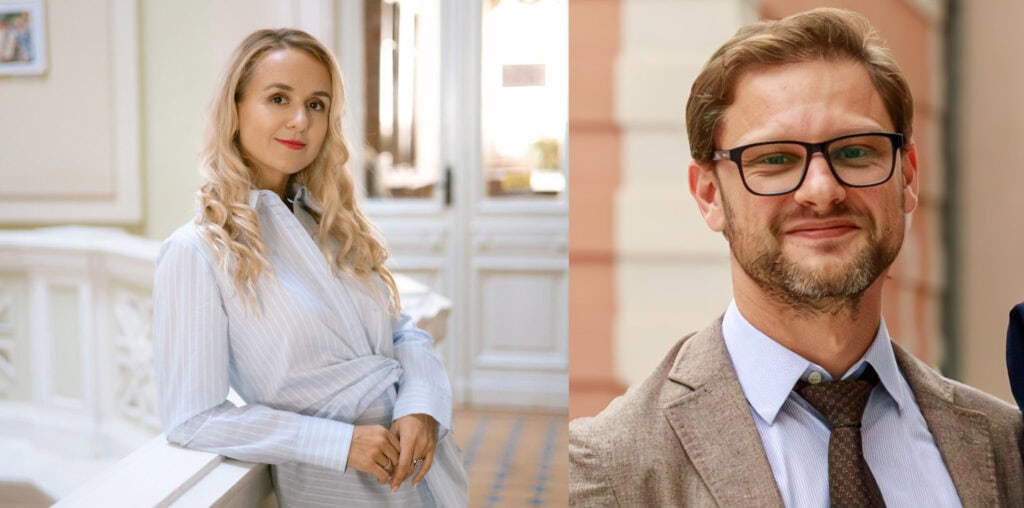
The break is over and Isabel Schoultz from the Department of Sociology of Law in Lund has finally arrived. She jokes that they have an “academic leeway of fifteen minutes” in Lund and that there should be a rule for researchers when it comes to lecturing after journalists. She flags that hers will be a more classic sort of lecture than the one Martin Schibbye delivered.
“I think I have been most surprised by the defence, by how they have broken down the prosecution’s case,” she says. “Or tried to break it down, perhaps I should say. They have gone into footnotes in reports and small details in articles to find people who, according to them, have other backgrounds and other connections to the conflict than what was said from the beginning.”
She adds that amidst the seriousness there is also some humour, that people have been able to laugh in the courtroom. The sudden changes of mood, the sharp contrast between the darkest darkness and jokes, has surprised her. At the same time, both sides have been careful to maintain a conflict barrier. They do not meet in the cafeteria; they each go their separate ways between proceedings in courtroom 34.
A few days after the lecture, Martin Schibbye is back in courtroom 34. In the courtroom, and sitting on the bench outside of it, he looks at home, greeting and chatting with one person after another. This is his workplace. Also in the courtroom is Danish journalist Nils Carstensen, who has given evidence earlier in the trial, but is now here regarding his audio files from Sudan. They contain interviews that can be interpreted in different ways, like so much else in this case. For the prosecution, they provide evidence that civilians have suffered, while in the eyes of the defence, they are political propaganda for the rebel army SPLA.
Nina Törnqvist, researcher at the Department of Sociology in Uppsala, is also there, as is a school class from the Stockholm suburb of Kista. After repeated requests for them to be quiet, the class strolls out, one by one. Soon they have all left.
Törnqvist too is involved in the research project, which is funded by Riksbankens Jubileumsfond (RJ), an independent foundation which promotes and supports research in the humanities and social sciences. She tries to get to courtroom 34 as often as she can. She has been researching the interplay, the interaction, during trials for almost ten years. She has looked at relatively short trials involving murder, fraud and aggravated indecent assault. Her expertise is the method itself, court observations.
Previously, she studied the role of emotions in decision making.
“In this project, we are looking at what matters are in dispute, what legal issues are important in the trial, but also how the issues are pursued in the trial itself. It is an incredibly exciting case, because it is so exceptional in both the Swedish context and the international context,” she says.
The length of the trial is also exceptional, which makes the interactions very unusual. It involves highly skilled professionals with different areas of expertise, and some of the prosecutors and the presiding judge have met in previous cases.
In addition to Nina Törnqvist and Isabel Schoultz, both criminologists, Fanny Holm of Umeå University is also part of the project, contributing legal expertise.
The trial is a resource-intensive process. The preliminary investigation alone took over ten years, and it comprises of more than 80,000 pages of documentation. There are five prosecutors working on the trial. A sixth prosecutor has retired. Meanwhile, the defence enjoys the financial backing of the oil company and is therefore able to dig into every little detail along the way.
“One of the articles we have been working on in this project is about what stories the two sides choose to tell about what happened in Sudan during that period. There are two extremely different versions,” Törnqvist tells us.
The prosecution argues that when Lundin Oil first entered the area, Sudan as a country had been severely impacted by the various civil wars that had been going on for many years. However, the area in question had not previously been touched by civil war.
Like Martin Schibbye, Törnqvist says that the so-called all-weather road, which has sometimes been called the road of death, which Lundin Oil built, plays an important role in the trial. Opinions about the road differ and depend on how the conflict is viewed in general. The road could be used by the civilian population and created an infrastructure. That is Lundin Oil’s position. The other side argues that the company contributed to bringing the war into the region and, in the next step, to the death and displacement of so many people. Is it a war fuelled by the Sudanese regime with the help of paramilitary militia groups, or is it a question of clan fighting that has nothing at all to do with the major north-south conflict in the country?
Research project on Sweden’s longest trial to date
Researcher Isabel Schoultz is following the trial, together with a research team. The project will lead to the production of scientific articles, and once the verdict has been reached, the aim is to organise a symposium. The project consists of court observations, document studies and interviews. It examines how the parties argue their cases and how they interact, as well as how emotions and conflicts are manifested in the courtroom. The project is financed by Riksbankens Jubileumsfond.
Törnqvist and her colleagues have not been able to attend every day of the trial, but she is grateful that Schibbye is there day in and day out. Independent journalism is important, but his meticulous reporting also helps them complete the puzzle, the 10,000-piece puzzle that is this trial. Every day could see a breakthrough.
“In a trial of this length, there are quite long passages where there is not much interesting or dramatic happening and things are just chugging along. But I think there is some kind of excitement and uncertainty in every interrogation, every part of the trial,” says Törnqvist. “Even though we have been following the trial, it is difficult to see which way the final verdict will go. It is not as clearcut a case as other large but less complicated cases can be.”
The Lundin Oil trial will be decided by two legally qualified judges and four lay judges. During the trial Törnqvist has often thought about how strongly the requirement for objectivity permeates their behaviour and how difficult it is to read their thought processes. In her previous research, she and her colleagues also talked about Swedish judges being stone-faced. They are careful not to show what they regard as interesting and exciting, nor do their faces and body language reveal what they consider to be less relevant.
She thinks that it is great that so many international researchers are interested in this particular trial. There has been a great deal of curiosity about the project at international conferences.
“For example, Isabel Schoultz and I have written an article on the transnational dynamics involved in the simple fact that the offences took place in southern Sudan but are being tried in a Swedish court. What does that mean in the long term?”
Schoultz is looking forward to the closing arguments. What aspects will these top-level professionals push the hardest? Because if one thing is clear, it is that both sides have learnt a tremendous amount during the trial. What has worked? What has not worked?
How will she feel when it is all over? She does not know. Perhaps it will not even be over when it is over. Will the decision be appealed? Nobody knows. But Isabel Schoultz is certain that the verdict will impact other prosecutions around the world in the future.

Who is Martin Schibbye?
Martin Schibbye is a journalist and editor-in-chief of the news website Blankspot. He and his colleague Johan Persson were arrested in Ethiopia in July 2011 on suspicion of terrorist offences. They were pardoned after 14 months.
Before and since then, he has focused on covering what he believes are under-reported regions and events abroad. Since the start of the trial against Lundin Oil, he has been present every day in courtroom 34 of the Stockholm District Court. This will eventually result in a book, but his reporting is also published continuously on Blankspot.