It has been just over 11 months since Donald Trump was sworn in as the President of the United States. Just a few weeks into his second term, conflicts arose with the American academic community. The Trump administration accused several major higher education institutions – including Harvard and Columbia University – of anti-Semitism and discrimination against conservative students.
As punishment, federal funding was withdrawn, threats regarding restrictions on admitting new international students were issued and attempts were made to deport already registered international students. Some higher education institutions, such as Columbia University, chose to meet the president’s demands so as not to put ongoing and future research in jeopardy. Others, like Harvard, chose to fight back. At several higher education institutions, conflicts are still ongoing.
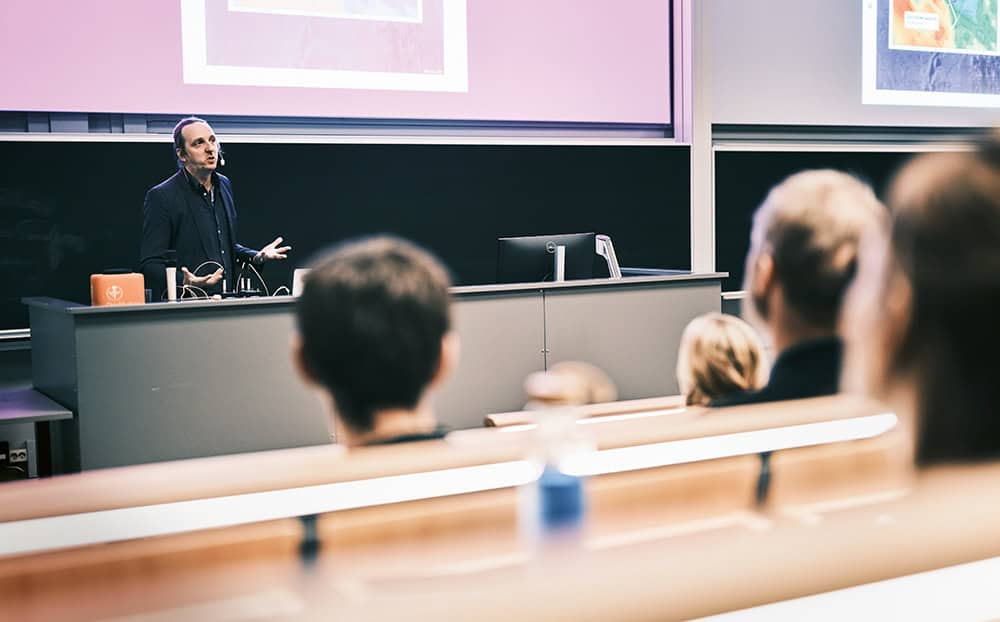
“There is a feeling that if universities give in to the administration now, the demands will keep coming,” says Fredrik Logevall, a professor at Harvard for the past ten years. “In fact, they will probably escalate and there will just be more and more of them.”

Fredrik Logevall
Professor at Harvard
A new report from Scholars at Risk finds that there have been more than 40 attacks on academic freedom in the United States in the first half of 2025. At the same time, hundreds of experts warn that American democracy is being dismantled.
In academia, the United States can be regarded as a major power. For many decades, it has been home to many of the world’s top researchers in several fields, and it has strong and long-standing partnerships with the rest of the world, including Sweden.
“What is happening in the USA now is having a major impact on Swedish research and research policy,” says Laila Abdallah, Head of Research at Akademikerförbundet SSR, the Swedish trade union for social science professionals. “We have already seen that several projects have had to be put on hold because American funding has been withdrawn.”

Laila Abdallah
Head of Research at Akademikerförbundet SSR
Before the summer, she worked at Saco, the Swedish Confederation of Professional Associations, where she wrote a report entitled From Washington to Wallenberg – the effects of Trump’s research policy on Swedish collaborations, strategies and academic capacity. The report not only describes what happened in 2025, but also provides an overview of Trump’s first term in office.
Budget proposals with massive cuts for research agencies already revealed the president’s attitude towards American academia.
“At the same time, it is important to understand that this is not something new that began with Trump,” says Abdallah. “Since the 1990s, when there was a lot of discussion about affirmative action, there has been a gradual development in American research policy that has created this situation. But the Trump administration’s actions represent an alarming escalation.”
As in Trump’s first term, the president’s proposals for the 2026 federal budget are being seen as a signal for continued drastic measures in American academia. In the proposed budget, Trump wants to make massive cuts to the budgets of several of the largest research agencies, such as the National Institutes of Health (NIH) and NASA. The motivation behind the cuts is to put an end to what the administration regards as left-wing and ”woke” research.
In addition to reduced funding, the Trump administration has also started banning words that it sees as politically charged, drawing up what it calls the DEI list, where DEI stands for diversity, equity and inclusion. The list includes words such as women, accessibility, climate change and gender. The free speech organisation PEN America has compiled over 350 words that have been banned or flagged as problematic by federal authorities, and the list is being updated continuously.
“What they are trying to attack,” explains Abdallah, “is any kind of research that is ideologically linked to climate, minority issues, gender issues and so on. But it is important to remember that excluding words like ’woman’ will also impact cancer research, neuroscience, public health and a number of other areas that are incredibly important for society as a whole.”
“We must not shy away from the fact that there are political forces here in Sweden that want to go in the same direction,” she adds, “which is why it is important to establish ethical frameworks to safeguard academic freedom in the Swedish constitution.”
The list of banned words not only impacts research, but also which international researchers are granted visas to enter the United States. Several people from different countries have reported that they have been denied visas because their research relates to something on the DEI list.
It is not only the way research is presented that is affected. Databases may also be changed.
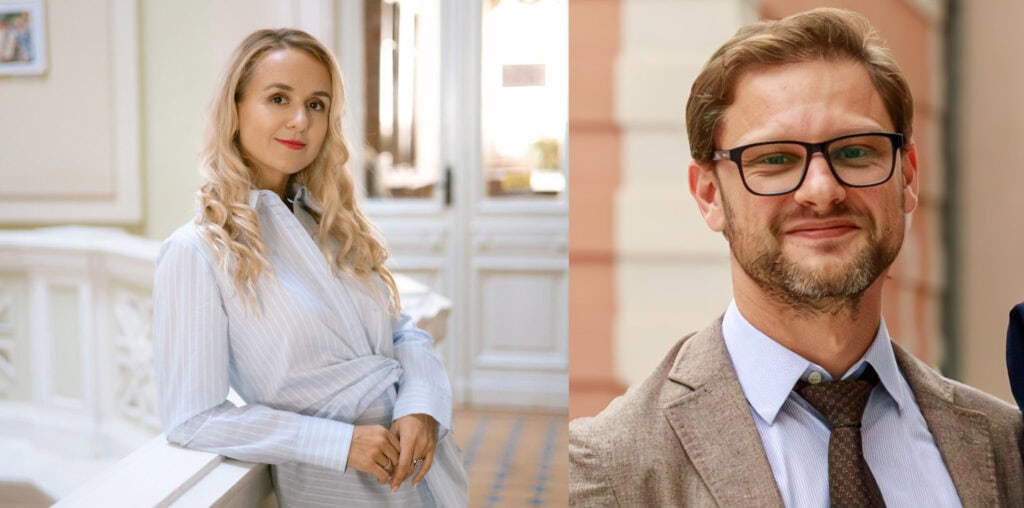
“Several datasets used in global medical research are stored in the USA,” explains Alexandra Wennberg, a researcher in epidemiology at Karolinska Institutet, who was born and raised in the United States but has been living in Sweden since 2020. “If they remove markers such as gender, ethnicity and all types of diversity, those datasets will not be as useful and large groups of the population risk being missed in research. This is extremely worrying.”

Alexandra Wennberg
Researcher in epidemiology at Karolinska Institutet
She adds that the DEI list has affected the way she thinks about her own research and how to present it.
“Unfortunately, I feel that I have to think more carefully about how I express myself. Partly to be able to get published in certain publications, but also in a broader context: could how I express myself have negative effects for me in the long run? It is sad, but true.”
Meanwhile, Fredrik Logevall, professor of history at Harvard and a visiting professor at Uppsala University, says the list has had no effect on him or his colleagues at Harvard.
“None of us have changed how we lecture, what we say or what topics we touch on. We will see what happens in the future, but I think it is misleading to say that this list is impacting everything in academia.”
The reactions from Swedish researchers to what is happening in the United States are overwhelmingly negative. Some researchers have decided to boycott the country completely. Others think the opposite, that it is more important than ever to continue travelling there and collaborating with American colleagues.
One researcher who falls into the latter group is Evelina Edfors, a doctoral student in philosophy of religion at Uppsala University. She has several important partners and contacts in the United States that she does not intend to break ties with.
“I am currently doing research on the challenges of disagreement and diversity,” she explains, “and the current polarisation in the USA is such a clear example of when things go wrong and the importance of engaging in rational and respectful discourse, so it is doubly relevant for me to continue travelling there.”

Evelina Edfors
Doctoral student in philosophy of religion at Uppsala University
This year, she has visited the country several times and has not experienced any problems with getting a visa or being stopped at the border. However, she has become more aware of the risk of it happening.
“I have attended lectures with lawyers who tell us how to go about making applications and how to deal with questions at the border to avoid being refused entry. They discuss things like how to behave when you’re in the queue, what kinds of thing you should not have on your mobile phone and how to answer questions without raising unnecessary suspicions.”
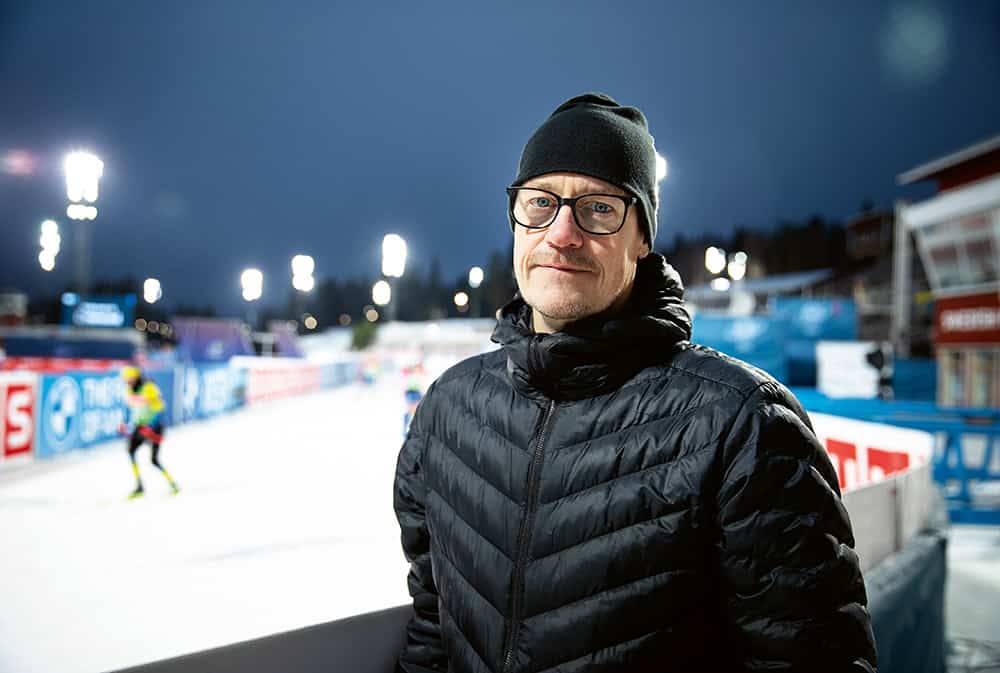
Another researcher who is not turning her back on the United States is Pernilla Wittung-Stafshede, a professor of biophysics and chemistry who previously worked at Chalmers. This summer she moved to Houston, Texas, to take up a position at Rice University.
“I thought the opposite, that ‘damn it, I’m going there to fight’. If Trump were to stop me from going, that would be an even bigger victory for him” she says.

Pernilla Wittung-Stafshede
Professor of biophysics and chemistry who previously worked at Chalmers
She describes a campus that is continuing with its normal activities, despite the tense political situation. She feels there is an open climate where different views are welcome and where people joke about Trump without any consequences. At the same time, the whole university is following developments in the country closely.
“For my part, I am not directly affected by budget cuts to federal research agencies, because my funding has already been secured. But I have colleagues who are affected, and it is terrible. Nobody really knows what will happen in the future.”
Wittung-Stafshede has previously lived and worked in the United States for several years, so long in fact that she has dual citizenship and an American passport. She therefore did not need to apply for a visa to enter the country.
“If I had had to apply for a visa to come here, I think it would have been more difficult,” she says. “I would also have been worried about being sent home. So far, it does not matter if you have two citizenships. If you are American, you are American. But that could change.”
Fredrik Logevall also has dual citizenship. He has lived in the United States since 1987 and has no plans to return to Sweden, despite working at the university that has been at the centre of most of the turbulence.
“As a historian, I am not dependent on federal funding for my research. Nor have I noticed that things have been quite as bad here on campus as they may appear in the media. Many of Trump’s threats do not seem to have come into effect. For example, we have not had any problems getting international students here for the autumn term, which was something we feared during the spring.”
International students in the US
The number of international students starting new studies in the USA has fallen for the first time since the corona pandemic. The largest decrease, 17%, is in the group studying freestanding courses. The second biggest drop, 12%, is among master’s and doctoral students.
Since 2005, the number of international students in the United States has increased continuously from year to year, with the exception of 2019-2021.
SOURCES AND FIGURES:
Number of international students in the United States from 2003/04 to 2023/24
Fall 2025 Snapshot on international student enrollment
Having lived in the United States for almost 40 years, he has experienced several political upheavals, including Trump’s first term. This time it feels different.
“I am more worried now,” he says, “because this is a more coordinated and sustained attempt by Washington to destabilise academia. I think it is the result of the people around Trump. They were well prepared to launch a fierce attack on the country’s top universities, which in turn were not at all prepared to respond, even though they should have been.”
“But I still believe in the USA. I think we can get through this and find our way back. The critical thing now is to make sure that the consequences are not too severe.”
Since Trump took office in January, several American researchers have decided to leave the country. Here in Sweden, we saw campaigns this spring from both politicians and higher education institutions to attract Americans to Sweden.
One person who came here is Marcia Rockman, an archaeologist and researcher in cultural heritage and climate change. For the past 15 years, she has lived in Washington DC and worked at various American federal agencies. During Trump’s first term, she worked at the US National Park Services as its first coordinator for climate change adaptation of cultural heritage and resources.
In 2018, she decided to leave the position, finding it impossible to do her job while the administration opposed anything that touched on both climate change and cultural heritage.
After Trump took office for his second term, she lost all funding for her ongoing research project and was completely without income for the first half of the year. Through contacts at Linnaeus University in Kalmar, she eventually received support from the Swedish Research Council to conduct research here in Sweden.
She is now employed at the university for a year as a visiting researcher.
“Those of us who lived in Washington got to see all these rapid changes from the front row,” she explains. “It was frightening. The administration was making drastic decisions that were actually illegal, but that no one could stop fast enough. Whole institutions were demolished. It was extremely upsetting.”

Marcia Rockman
Archaeologist and researcher in cultural heritage and climate change
She is happy to be able to conduct her research here in Sweden and hopes to be able to continue beyond the year for which she has received funding. At the same time, she does not want to give up hope of being able to return to the United States in the future.
“When I worked at the National Park Services, I had a large map of the country’s national parks above my desk. I really miss looking up at it, and it hurts to know that no one is taking long-term care of the parks right now,” she says, visibly emotional and with a tremor in her voice.
In practice, Swedish research has already been affected by the withdrawal of funding from American research institutes. Projects have had to be put on hold or postponed altogether because funding has disappeared. Laila Abdallah believes that Swedish research policy must respond quickly to secure the lost funding in other ways, for example by building relationships with other strong academic countries, such as Canada, the Netherlands and Germany.
“We are now seeing private funders like the Wallenberg Foundations increasingly stepping in to fund research,” she says. “It is good that there are private organisations that support research, but it is important that we also strengthen publicly funded research, for example by increasing the basic grants to higher education institutions, which have been eroded over the course of many years. Politicians must take ultimate responsibility for ensuring that there is a healthy balance in the funding and structure of Swedish research.”
Basic research in particular needs to be secured, she underlines, as there is a risk that private actors will be more interested in steering research towards technically applicable solutions.
Agencies hit by deep cuts in Trump’s proposed 2026 budget
NIH – The National Institutes of Health is the most important US government medical research institute.
Proposed cut: approximately 40%
NSF – The National Sanitation Foundation ensures that food, drinking water and consumer products meet health and safety standards.
Proposed cut: approximately 57%
NASA – The National Aeronautics and Space Administration is the federal agency for space flight and research.
Proposed cut: approximately 52%
EPA – The Environmental Protection Agency is a government agency that is independent from federal departments and works to protect the environment.
Proposed cut: approximately 55%
NOAA – The National Oceanic and Atmospheric Administration is a scientific government agency tasked with studying conditions in the oceans and atmosphere.
Proposed cut: approximately 26%
CDC – The Centers for Disease Control and Prevention is the United States’ central agency for the control and prevention of disease in the community.
Proposed cut: approximately 44%
Universitetsläraren has sent written questions to three higher education institutions about their collaborations with the United States: Uppsala University, Lund University and Karolinska Institutet, KI. All three have replied that they do not intend to end their American collaborations, but that they are monitoring what is happening in the country.
“Many researchers have expressed great concern about how they will be able to continue their research in the future,” writes Andrea Prander, an information officer at Karolinska Institutet. “KI continues to be a long-term and robust partner in these collaborations. KI will not adapt language, delete concepts or entire subjects from our research and education or accept other unreasonable restrictions on the freedom of research.”
Regarding the proposed budget cuts for research authorities in the budget proposal for 2026, Karin Forsberg Nilsson, Dean of the Faculty of Medicine at Uppsala University, writes:
“This is disastrous for research in the USA, but also has consequences for Swedish researchers. In basic medical research, 28% of Swedish published articles have at least one American author. In other words, one third of projects are the result of collaborations with the USA. We receive reports almost every week from American colleagues who are losing funding. This is extremely serious.”
All three higher education institutions state that they are not looking for alternative partners to replace the role the United States plays in their research, but rather they are trying to broaden their networks of contacts.
“Rather than seeking ’alternatives’ to replace the USA, we are focusing on diversifying and broadening our global engagement in general, which means that we are also strengthening strategic partnerships in other prioritised regions. But this broadening is a complement, not a substitute for our collaborations in the USA,” writes Richard Stenelo, Head of the Global Engagement Section at Lund University.
All the researchers that Universitetsläraren has spoken to have similar concerns about the future of the United States. They all fear that the decisions taken now by the Trump administration will lead to fewer young people choosing to start a career in academia.
“In research, we always have long lead times. There is a danger that the decisions taken today will mean that we have a much smaller cohort of young researchers in the coming decades, that there will be a gap,” says Alexandra Wennberg.
Pernilla Wittung-Stafshede agrees.
“When academic research is attacked like this, we risk the best minds going to private companies or other careers. The long-term impact will depend on how cautious universities are about recruiting new researchers and students. I think it is essential to have the courage to invest and to believe in the future.”
Experts warn of deteriorating democracy in the US
In the Bright Line Watch study, over 700 American researchers rate American democracy on a scale from zero (complete dictatorship) to 100 (perfect democracy). The study is conducted four times a year. Between November 2024 and February 2025, the score dropped from 67 to 53. In 2025, the score has remained at the same level.
The United States now ranks between Israel (49) and Mexico (60) in the global league table. Previously, it ranked around the same level as the UK (83) and Canada (88). The results indicate that the US is increasingly moving away from democracy and towards autocracy.
The experts surveyed also warn that Trump’s potential actions in 2026 will further damage US democracy significantly.
Source: Bright Line Watch